
Happy New Year, California. It’s January 2nd, and a bunch of new laws that Gov. Gavin Newsom signed last year are already in effect, or about to kick in over the next few months.
A lot of them feel pretty personal: stuff about your cat, your kid’s phone at school, how much you’ll pay for insulin, even what kind of bag you grab at the grocery checkout.
Here are the seven new laws in California for 2026 that everyone’s talking about.
1. Ban On Cat Declawing

Cat owners who ever winced at the word declawing can stop bracing for the fine print. California started 2026 with a ban on the practice, meaning a veterinarian cannot perform it unless a medical reason makes it necessary.
Supporters pushed the point that declawing goes way beyond a nail trim. The procedure removes part of each toe so the claw cannot grow back, and animal welfare groups have argued that pain and long-term issues can follow.
The new rule puts California in the camp that treats declawing as a last resort, not a convenience.
Veterinarians who break the law can face discipline from the California Veterinary Medical Board, including license penalties.
If the problem is claw marks on furniture, you should try solving that with scratch posts in the spots your cat already targets, nail caps, regular trims, and a bit of simple training, because declawing stays on the table only for medical reasons now.
2. Cap On Insulin Cost Sharing At 35 Dollars Per Month
View this post on Instagram
Anyone juggling diabetes already knows how ugly insulin prices can get. California steps in for 2026 with a hard ceiling: SB 40 limits what insured patients pay for insulin to 35 dollars per month, and the cap applies to all insulin types.
People remember the blueprint that made everyone furious in the first place. A pharma guy buys the rights to an old medicine, then jacks the price overnight because nobody can just walk away from a life-saving drug.
Martin Shkreli pulled that stunt with Daraprim back in 2015, turning a cheap pill into a headline and a warning sign for the whole system.
Insulin pricing has its own mess, with manufacturers and the middlemen getting blamed for a rebate-driven setup that rewards higher list prices.
Federal regulators have gone after big pharmacy benefit managers over insulin costs, saying the incentives push prices up for patients.
California also has the CalRx effort in the background, meant to put a state-backed insulin option on shelves. One CalRx insulin is expected to arrive in January, which adds more pressure in the same direction: cheaper, more predictable refills.
3. Limits On Law Enforcement Mask Use
Masks became part of normal life for a while. Police masks carry a different weight because a covered face can also mean a hidden name and badge number, meaning zero accountability when something goes sideways.
Starting January 1, SB 627 narrows when officers can cover their faces while working. In most situations, concealing identity on duty becomes a crime, with officers who intentionally break the rule facing an infraction or a misdemeanor.
The law reaches state and local agencies, and it also claims to cover federal officers operating in California, including ICE. That part already sparked a fight.
Trump administration officials said they would ignore it, and the US Department of Justice challenged the law in court in November, arguing it clashes with federal authority.
Plenty of exceptions stay in place, like undercover work, tactical operations, and situations tied to protecting identity during prosecution. Agencies also have homework. Official policies need updates by July so everyone knows when a mask passes and when it crosses the line.
4. Phaseout Of Plastic Grocery Bags
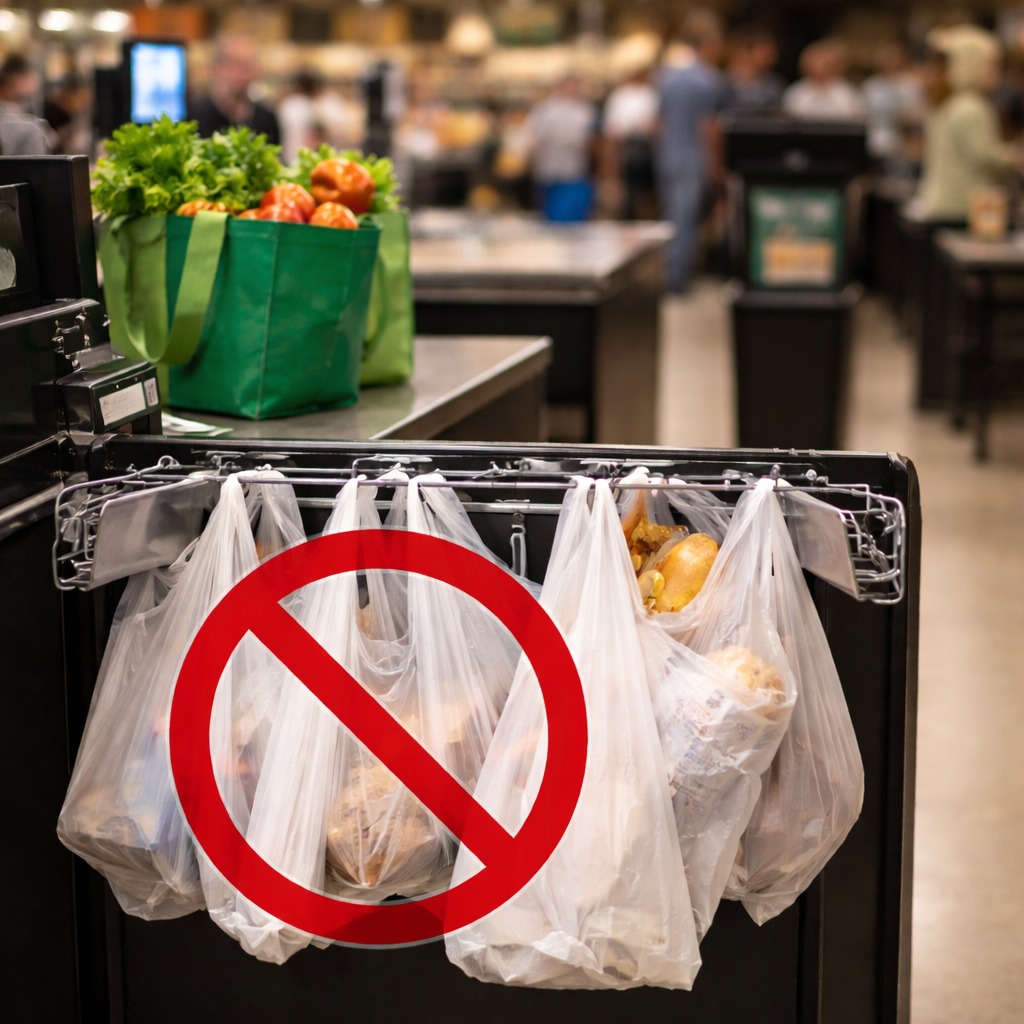
Plastic grocery bags have been on borrowed time for years, and 2026 is when the clock finally hits zero.
Between a state law already pointing toward a statewide phaseout and a separate legal settlement that put pressure on manufacturers, the thin plastic bags that show up at checkout are basically on the way out.
Paper bags stay, so nobody is walking out empty-handed. Expect the bigger change to hit in the little everyday moments: that quick stop for two things, the surprise bag fee, the habit of grabbing three bags because one always rips.
Bring a reusable one, because checkout lines in 2026 are going to make that feel less like a lifestyle choice and more like common sense.
5. Limits On Student Phone Use In Schools
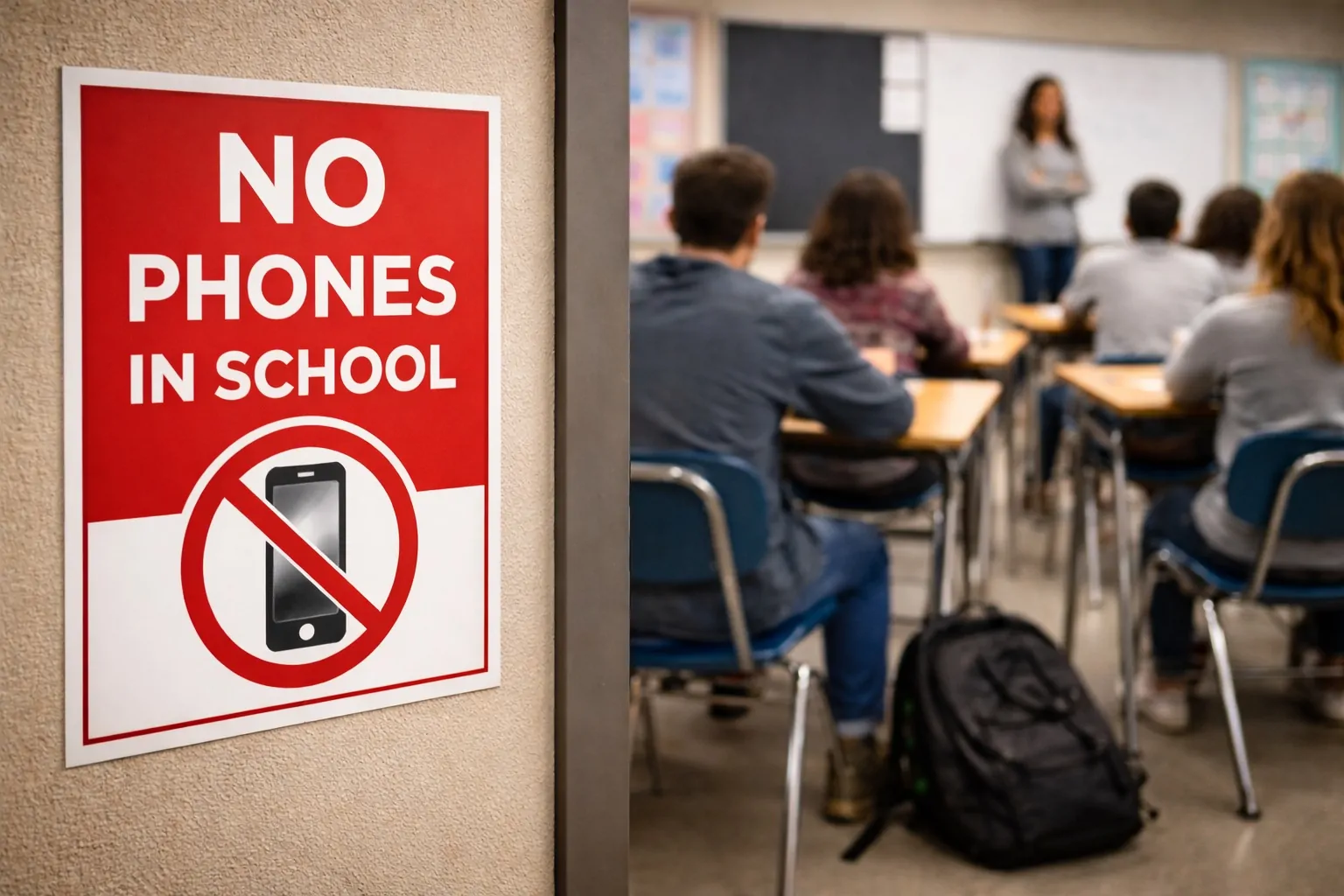
Phones at school have been a war for years, and the state finally forced a decision. Under the Phone Free Schools Act, every school district has a deadline.
By July, school boards have to adopt a policy that limits student smartphone use during the school day, or bans it outright.
The reason is the usual list that parents and teachers keep repeating: cyberbullying, anxiety, distraction, grades sliding, kids never getting a break from the feed.
On the other hand, some teachers are against this rule, claiming that it may affect the quality of some classes, especially those related to IT, marketing, and social media.
@cnn Nine states in the US have either banned or restricted cell phone use in schools, with other states looking to do the same. CNN’s @pamelabrowncnn speaks with a former public school principal who is against an outright ban. #cnn #cellphone ♬ original sound – CNN
Some districts already had rules, some went hard with full bans, and others basically left it to teachers. The new law makes sure every district picks a lane.
So by next school year, expect new rules in the handbook, more phone lockers or pouches, a lot of teachers enforcing it, and more kids trying to test the edges.
If you’ve got a kid in school, you know the drill already: those daily battles over putting the phone down. Well, this new law is about to make those arguments a permanent fixture at your dinner table, whether you’re ready for it or not.
6. Expanded Anti-Discrimination Protections In Schools
January 1 flipped the switch on AB 715, after months of tension in schools and on campuses over identity, harassment, and what gets said in class.
The push came in the shadow of October 7, with lawmakers hearing more reports of antisemitism and pressure to make sure Jewish students get stronger protection.
The final version goes broad. Every student gets expanded anti-discrimination protections, and the law also spells out an intent to specifically protect Jewish and Israeli students from harassment.
Schools now have to investigate and address discriminatory content used in classrooms or staff training, so districts have less room to shrug and move on.
A second track shows up through AB 715 and SB 48. California is setting up new state-level anti-discrimination coordinator roles meant to track and prevent bias based on identity.
Schools tied to antisemitic content can be pushed into an improvement plan with the state antisemitism coordinator.
Expect debate to keep going, because some groups worry about how far the rules reach into speech and teaching.
7. Gun Safe Storage Requirement
View this post on Instagram
January 1 also brought a new baseline for gun storage. SB 53 now requires gun owners to keep firearms in a gun safe or secured with a certified safety device like a cable lock.
Supporters say the point is basic prevention. Safe storage can reduce accidents, make it harder for kids to get hold of a gun, and lower suicide risk by adding one extra step.
Critics say the rule mostly hits lawful owners and will be tough to enforce.
That last part is true in practice. Police usually find unsafe storage only after something else already gone wrong, and misdemeanor charges show up only after three violations.
Unloaded antique firearms get an exemption.
Final Thoughts
So yeah, new year means new rules in California. A few of them will actually save people money or make things a bit safer, while others are just another hassle you’ll have to get used to.
Love ’em or hate ’em, they’re here now, and the rest of us are along for the ride, figuring it out as we go.
