

The last remaining nuclear arms control treaty between the United States and Russia has officially expired, leaving the world without a formal framework to limit the arsenals of its two largest nuclear powers for the first time in over 50 years.
As the dust settles, both Washington and Moscow are signaling their next moves in a new era of strategic uncertainty.
For decades, a series of treaties provided a sense of predictability and transparency to the often-tense relationship between the United States and Russia. The New START treaty, which entered into force in 2011, was the final pillar of this architecture.
It capped the number of deployed strategic nuclear warheads at 1,550 for each country and limited the number of deployed missiles and bombers to 700. But as of midnight on February 5, 2026, those limits are gone.
The expiration was not a surprise. Russia suspended its participation in the treaty back in February 2023, citing U.S. support for Ukraine. While Moscow pledged to continue adhering to the numerical caps, it halted all verification activities, including the crucial on-site inspections that allowed each side to trust, but verify, that the other was holding up its end of the bargain.
Now, with the treaty officially off the books, the critical question is: what happens next?
Moscow’s Calculated Offer
In the lead-up to the expiration, Russia made a notable, if cautious, proposal. The Russian Foreign Ministry announced that it is prepared to continue adhering to the central quantitative limits of the New START Treaty for one additional year.
This is not a formal extension, but rather a voluntary commitment, a kind of “gentleman’s agreement” in the high-stakes world of nuclear diplomacy.
However, this offer comes with a significant condition: that the United States reciprocates. Moscow is essentially putting the ball in Washington’s court, testing whether the U.S. is willing to maintain the status quo, at least for now.
This move is seen by many analysts as an attempt by Russia to appear as the more responsible actor on the world stage, while simultaneously leaving its options open.
“In the current circumstances, we assume that the parties to the New START are no longer bound by any obligations or symmetrical declarations in the context of this agreement,” the Russian Foreign Ministry stated, signaling a formal end to its legal commitments while opening the door for this informal arrangement.
Washington Seeks A New Framework With China Included
The U.S. response has been less direct. The current administration has been publicly dismissive of the treaty’s expiration, with former President Trump, a key figure in the current political landscape, having previously stated, “If it expires, it expires. We’ll do a better agreement” .
This sentiment reflects a broader shift in American strategic thinking. For years, U.S. policymakers have argued that any future arms control agreement must include China. China’s nuclear arsenal, while still significantly smaller than those of the U.S. and Russia, is rapidly growing and modernizing without any transparency or constraints.
The Pentagon has repeatedly warned that China is on track to have up to 1,500 nuclear warheads by 2035, a number that would put it on par with the New START limits.
| Country | Estimated Nuclear Warhead Inventory (2026) |
| Russia | ~4,309 |
| United States | ~3,700 |
| China | ~600 |
| France | ~290 |
| United Kingdom | ~225 |
Source: Federation of American Scientists
Washington’s focus is therefore on a potential trilateral agreement that would bring all three major nuclear powers to the negotiating table. However, Beijing has consistently rejected such proposals, arguing that its arsenal is purely for defensive purposes and that the U.S. and Russia must first make much deeper cuts to their own stockpiles.
A World Without Guardrails
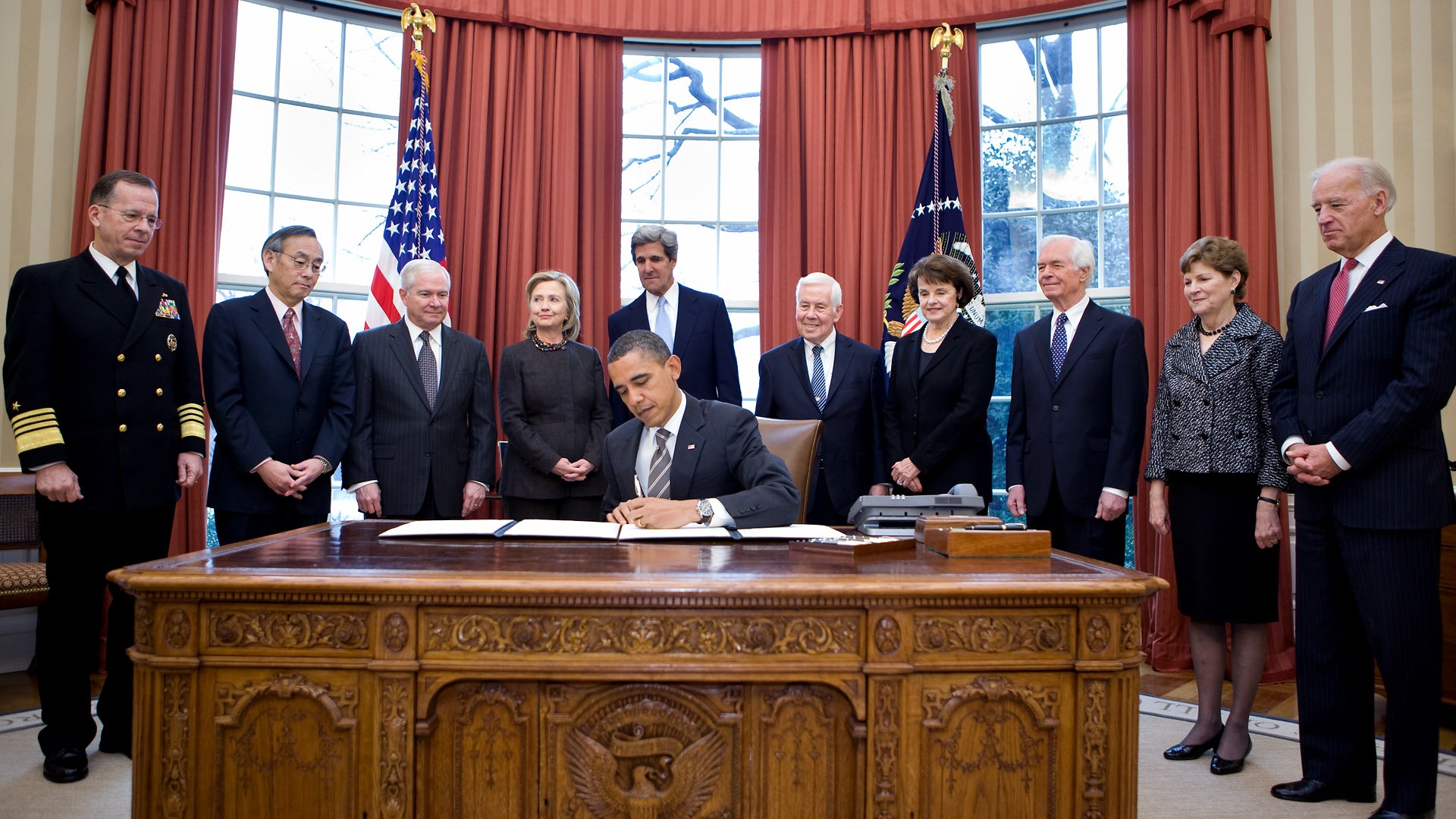
The expiration of the New START treaty has been met with alarm by many in the international community. UN Secretary-General António Guterres called it a “grave moment for international peace and security,” warning that “for the first time in more than 50 years, there is no treaty limiting the strategic nuclear weapons of the two largest arsenals”.
The primary concern is the loss of transparency and verification. Without the on-site inspections and data exchanges mandated by the treaty, both the U.S. and Russia will have to rely more heavily on their national technical means, spy satellites, and other intelligence-gathering tools to monitor each other’s nuclear forces.
This can lead to what experts call “worst-case scenario planning,” where each side assumes the other is building up its arsenal and responds in kind, potentially triggering a new and dangerous arms race.
What Was Lost with New START:
- Verifiable Limits: Hard caps on the number of deployed warheads and delivery systems.
- On-Site Inspections: The ability for each side to physically inspect the other’s nuclear sites.
- Data Exchanges: Regular, detailed reports on the status and location of all strategic weapons.
- A Forum for Dialogue: The Bilateral Consultative Commission provided a formal channel for communication on nuclear issues.
Looking ahead, the path to a new arms control agreement is fraught with challenges. The deep-seated mistrust between Washington and Moscow, exacerbated by the war in Ukraine, makes any form of bilateral negotiation difficult.
The added complexity of bringing China into the fold creates an even higher bar.
For now, the world holds its breath, watching to see if Washington will accept Moscow’s informal offer to maintain the New START limits for another year.
It may be a small, temporary measure, but in a world suddenly devoid of nuclear guardrails, it could provide a crucial window of opportunity to begin the difficult work of building a new framework for peace and stability.
References
- Statement of the Ministry of Foreign Affairs of Russia Concerning the Expiration of the Russia-US New START Treaty
- Last Russia-US treaty on nuclear arms control set to expire
- Federation of American Scientists: Status of World Nuclear Forces
- Statement by the Secretary-General on the expiration of the New START Treaty
