

Stage 5 starts when the birth rate drops below the death rate. In this phase, families have fewer than two children on average. Governments in Stage 5 countries face a new kind of challenge.
They must support many older citizens with a smaller group of workers. Therefore, pensions, healthcare, and labor shortages are becoming serious issues.
That is the main reason why Stage 5 countries have to reconsider their policies related to social matters and family, and somehow motivate people to have more children.
Keep reading to see which countries have entered Stage 5 and what that means for their future.
List of Stage 5 Countries
The leading Stage 5 countries are Japan, Germany, Italy, Greece, Portugal, Croatia, Estonia, and Ukraine.
Each of them has more deaths than births every year, and their total populations are slowly shrinking.
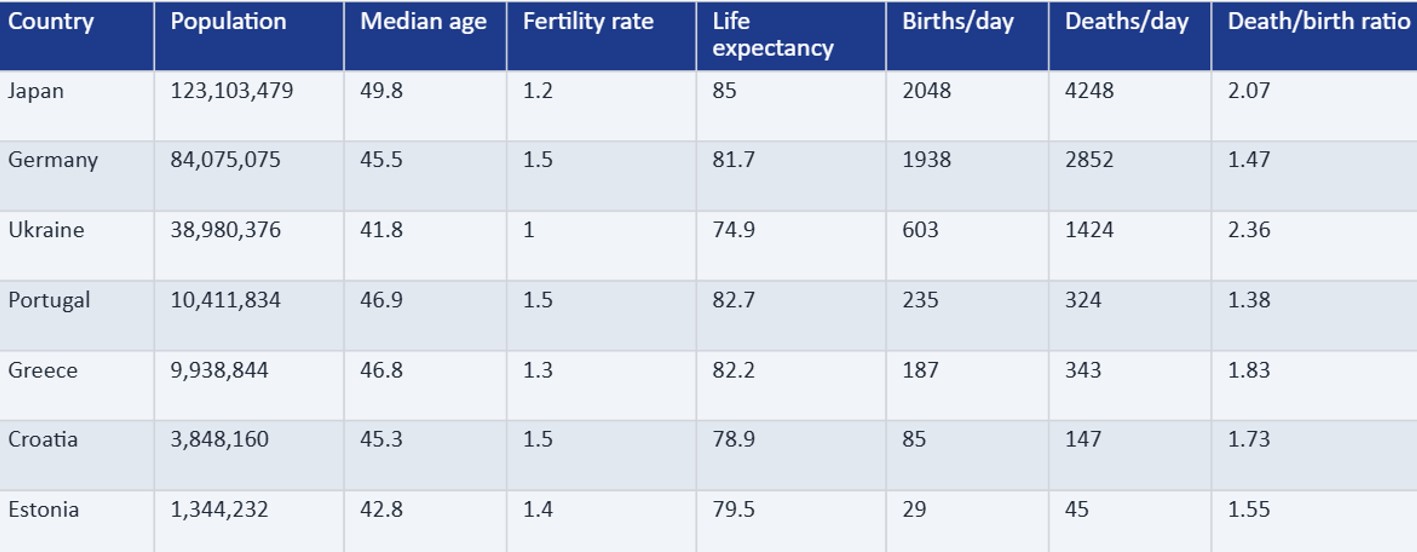
Japan leads the Stage 5 group with a population that keeps falling every year. Births are few, deaths are high, and almost a third of its citizens are over sixty-five.
In Germany, the picture is similar. Few children are born, and only immigration keeps the number of residents from falling.
Ukraine is deep in the fifth stage of demographic transition. Women have roughly one child on average, and deaths happen about twice as often as births.
Portugal and Greece also face rapid aging and very low fertility. People live long lives, but only a small share of families choose to have children.
Croatia shows a clear decline, too. Young people move abroad, leaving behind older generations and empty towns.
Estonia is smaller, but the pattern is the same. Population growth depends only on people moving in, not on births.
Japan Is Facing Fastest Population Decline in Decades
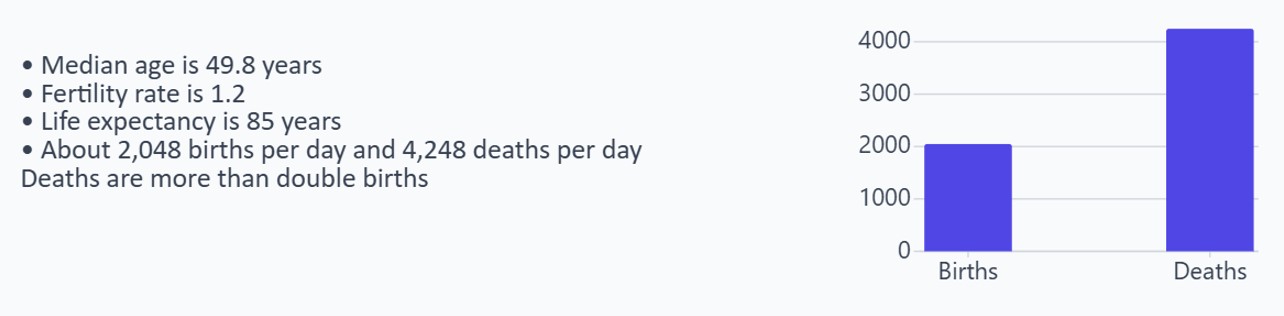
Japan lost about 900,000 people in a single year, leaving the total population at roughly 120,000,000. Fewer than 700,000 babies were born, while more than 1,600,000 people died. Every number points in the same direction.
The population is falling faster than at any other point in Japan’s modern history.
Older residents now dominate the demographic picture. Around 36,000,000 people are 65 or older, and nearly 21,000,000 are over 75.
Only Tokyo and Saitama still manage to grow, helped by jobs and inflows of younger workers. Most other prefectures keep shrinking year after year.
Authorities have introduced a wide range of measures. Families receive cash support, tax relief, and more childcare options. Companies are urged to shorten working hours and make it easier for parents to stay in the workforce. Immigration rules have been eased in limited ways to attract foreign workers.
Germany Faces a New Era of Fewer Births
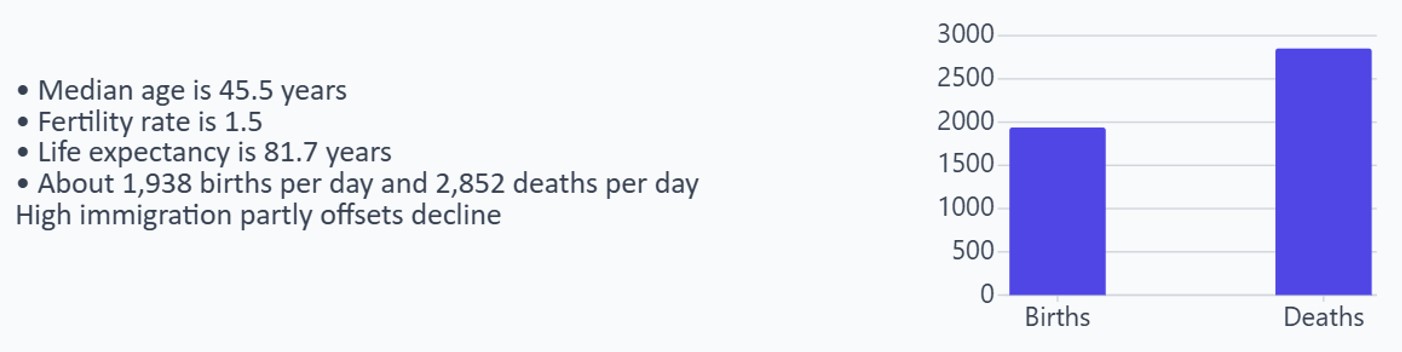
Recent data show a fertility rate of 1.3 children per woman, the lowest level in nearly twenty years.
Around 680,000 babies were born in the past year, while more than 1,000,000 people died. Total population stays near 84,000,000 only because of immigration.
Without new arrivals from abroad, the number of residents would already be dropping each year.
People aged 67 and above now account for more than 20 percent of the population, and that share will keep growing for decades. Experts warn that the workforce could shrink by more than 2 percent by 2045, even if the economy stays strong.
The pool of working-age residents keeps getting smaller as retirements rise and younger generations come of age with fewer members.
Political leaders have turned to family policy in response. Childcare access has expanded, paid leave conditions have improved, and tax relief for parents has increased. Cities such as Berlin and Hamburg invest in affordable housing and support for kindergartens.
Even with these steps, birth numbers remain far too low to balance an aging population.
Ukraine Faces a Generational Population Collapse
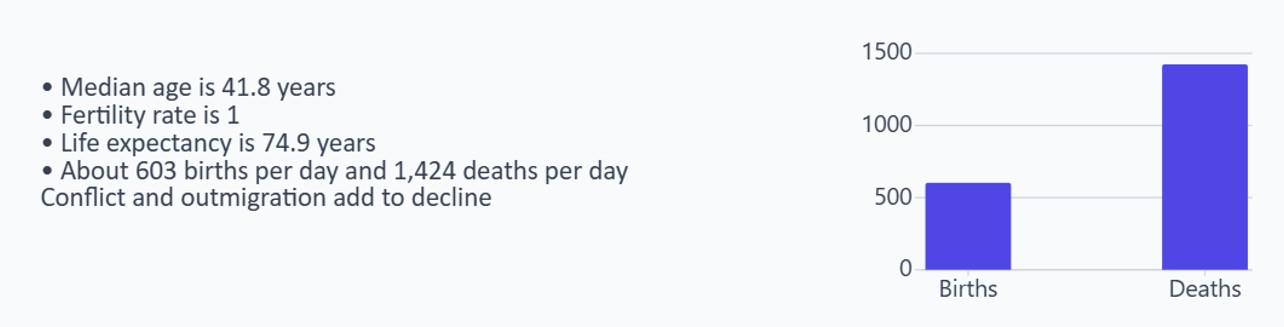
Years of war have torn families apart, destroyed cities, and forced millions to leave their homes. The total number of residents has fallen below 36,000,000, down from more than 44,000,000 before the invasion. Each month brings new loss through fighting, disease, and the slow collapse of daily life.
Standard population data cannot describe what Ukraine faces. Comparing fertility, death, and migration rates with peaceful nations does not make sense when people die in combat, flee for safety, or vanish under bombardment. The country lives under conditions that break every normal demographic rule.
Births have dropped to around 180,000 a year, while deaths have climbed to about 600,000. Women of childbearing age have fled in large numbers, many now living across Europe. The fertility rate is close to 1.0, one of the lowest in the world. Hospitals operate with few doctors, scarce supplies, and unstable power.
Life expectancy has fallen to only 68, but this number also includes those who died in war. When we exclude that as a parameter, the number is close to 75. Cities in the east and south stand half empty, and villages have become ghost settlements.
The government tries to repair homes, reopen schools, and encourage families to return, but the war makes progress fragile. Ukraine now fights for its borders and for the survival of its people at the same time.
The Strain of a Shrinking Workforce in Portugal

Portugal is successfully establishing a steady economic growth, but with a shrinking native population.
Around 85,000 babies are born each year, while close to 120,000 people die, which means a natural loss of roughly 35,000 residents annually. Total population stays near 10,400,000, mainly thanks to immigration. Without new arrivals, the fall would be far steeper.
The median age has reached almost 47 years, and more than 23 percent of citizens are now older than 65. Fertility remains near 1.4 children per woman, and small rural towns continue to empty. Many young adults leave for better wages abroad, while older parents remain at home.
The government is trying to make life easier for families: more money for each baby, more child benefits, and some housing help for young couples.
Immigration carries a big share of the burden.
In 2025, more than 100,000 foreign residents arrived, mainly from Brazil, India, and African countries. Newcomers help keep the population stable and fill jobs. Long-term demographic pressure, however, still hangs over the country.
Greece and the Weight of a Rapidly Aging Society
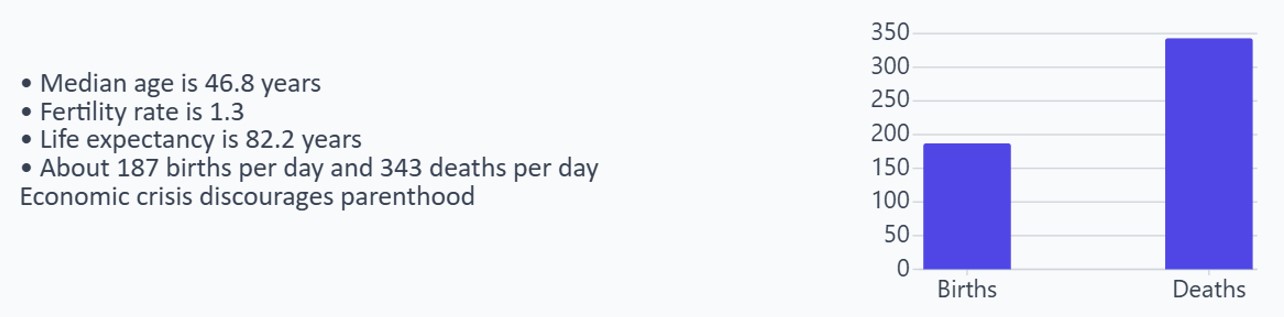
There are around 9.9 million residents in Greece, nearly a million fewer than ten years ago. Each year, around 185,000 babies are born, while close to 340,000 people die. That means Greece loses well over a hundred thousand people every year.
Families are smaller, and young adults keep leaving for better pay abroad. The average Greek is now 47 years old, and more than one in five citizens has passed 65. In many small towns, schools have closed because there are simply no children left.
Financial struggles make the trend worse. Years of economic hardship have made it tough for couples to start families.
The government offers cash bonuses for newborns, more parental leave, and tax cuts for larger families. Some towns even give free housing to people who move there with children.
Despite all that, births stay low, and the population keeps aging.
Croatia and the Silent Disappearance of Its Youth
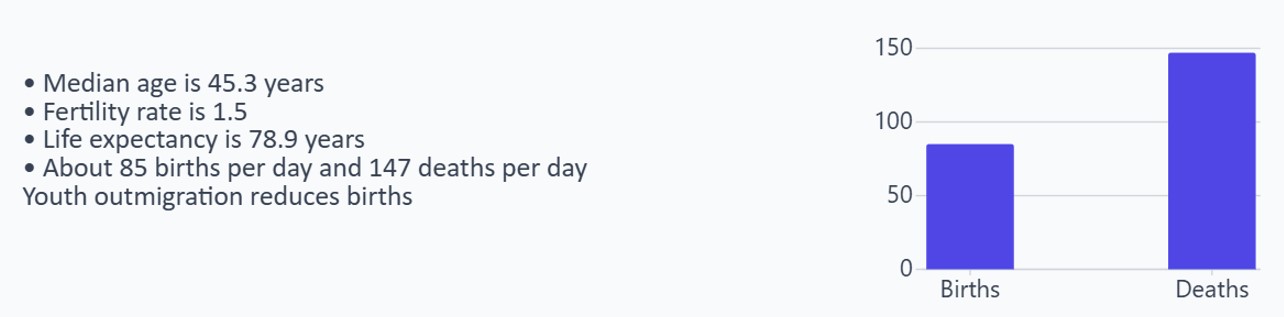
Croatia is ending 2025 smaller and older. The country now has around 3.8 million people, almost a million fewer than in the 1990s.
Each year, there are about 30,000 births and more than 45,000 deaths. On top of that, tens of thousands of young Croatians keep leaving for work in Germany, Ireland, and Austria.
You can see the change most clearly in the countryside. Villages in Slavonia and Lika have half the people they once had. Schools are empty, and the streets feel eerie and still, like a scene from a horror movie.
The average citizen is now about 44 years old, and nearly one in five is over 65. Families are smaller, and the number of children born each year keeps falling.
The government tries to push back against the trend. Parents receive child benefits, free schoolbooks, and help with housing in smaller cities. There are campaigns to bring people home from abroad, but few make the move.
As the economy is usually among the main drivers when it comes to demographic growth, we have to add that jobs in Croatia pay less than what the same workers can earn elsewhere in Europe. Since this Balkan country is part of the EU, nothing is preventing those people from simply relocating to another member country where wages are higher.
Estonia and the Fight to Keep Its Future at Home
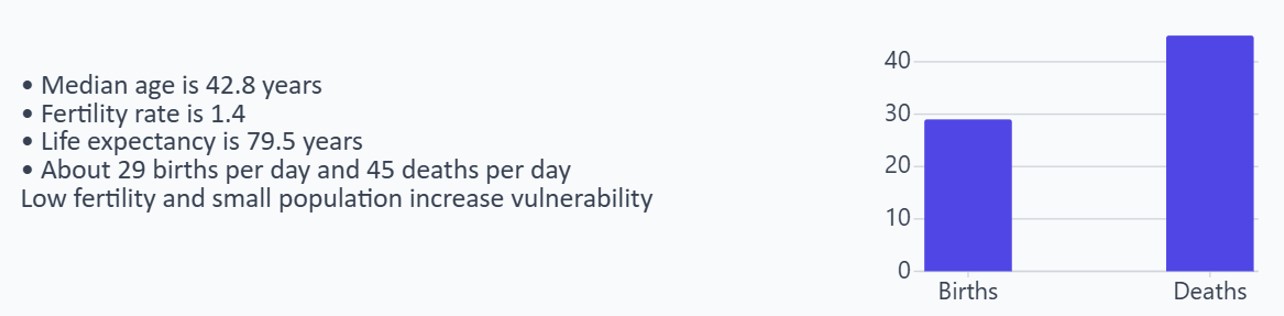
Estonia is one of the smallest populations in Europe, with a little under 1.4 million people. Each year, around 12,000 babies are born, and close to 18,000 people die.
The country loses more citizens than it gains through natural change, but immigration from Ukraine and other parts of Eastern Europe keeps the total number from falling too fast.
The average Estonian is now about 43 years old, and roughly one in five people is over 65. The fertility rate stays near 1.5 children per woman.
Many young people move to Tallinn for tech jobs or leave for work elsewhere in the European Union. In smaller towns, closed schools and empty homes show the slow loss that statistics only hint at.
The government has gone for a straightforward plan. Families get cash support, help with childcare costs, and parental leave that ranks among the strongest in Europe.
Some programs push younger people to move to rural areas with tax breaks and housing support. At the same time, rules for skilled foreign workers have eased so they can come in and help keep the economy running.
Countries That Are Candidates to Become Part of Stage 5 Soon
Many countries outside the current Stage 5 list are already showing the same warning signs. Falling birth rates, longer life expectancy, and low fertility now define their demographic path.
The countries most likely to join Stage 5 next include South Korea, China, Spain, and Taiwan.
South Korea Holds a Negative Record for Natality
South Korea now has the lowest birth rate on the planet. In 2025, the average woman gives birth to only 0.72 children. That means most couples have one child or none.
Fewer than 230,000 babies are born each year, and more than 380,000 people die. The population keeps shrinking, and many small towns already look empty.
Housing costs, long work hours, and expensive education make family life hard.
The government offers child bonuses, paid leave, and cheaper loans for parents, but none of it has worked so far.
| Population | 51,300,000 |
| Fertility Rate | 0.72 |
| Births per Year | 230,000 |
| Deaths per Year | 380,000 |
| Median Age | 45.6 years |
| Life Expectancy | 83.6 years |
China and the Start of Population Decline
China’s population is falling for the second year in a row. It dropped by about 2,000,000 people in 2024 and keeps shrinking in 2025. The fertility rate is near 1.0, and more than one in five citizens is over 60 years old.
The one-child policy from the past changed the population forever. There are fewer young people, more elderly citizens, and far fewer women of childbearing age. The government now allows up to three children per family and gives cash support, but the effect is small.
| Population | 1,405,000,000 |
| Fertility Rate | 1.0 |
| Births per Year | 8,000,000 |
| Deaths per Year | 10,000,000 |
| Median Age | 39.5 years |
| Life Expectancy | 78.1 years |
Spain and the Struggle with Generational Replacement
Spain is losing people every year. Births have fallen below 7 for every 1,000 citizens, and the fertility rate is about 1.2. Around 330,000 babies are born yearly, while 480,000 people die. Immigration from Latin America keeps the total number stable for now.
Many couples put off having children, and plenty of young adults stay in their parents’ homes well into their 30s. The state offers child benefits and cheaper childcare, yet birth numbers continue to fall.
| Population | 47,600,000 |
| Fertility Rate | 1.2 |
| Births per Year | 330,000 |
| Deaths per Year | 480,000 |
| Median Age | 45.1 years |
| Life Expectancy | 83.3 years |
Taiwan Grows Older Faster Than Expected
Taiwan now faces one of the fastest population declines in Asia. The fertility rate stands at about 0.9, and the number of births has fallen below 140,000 per year. Deaths are close to 220,000 annually, so the total population keeps shrinking.
High housing costs, long working hours, and hectic city life push many young people away from starting a family. Authorities offer cash support and longer parental leave, but the effect so far remains limited.
| Population | 23,000,000 |
| Fertility Rate | 0.9 |
| Births per Year | 140,000 |
| Deaths per Year | 220,000 |
| Median Age | 43.8 years |
| Life Expectancy | 81 years |
What are the Stages of the Demographic Transition Model?
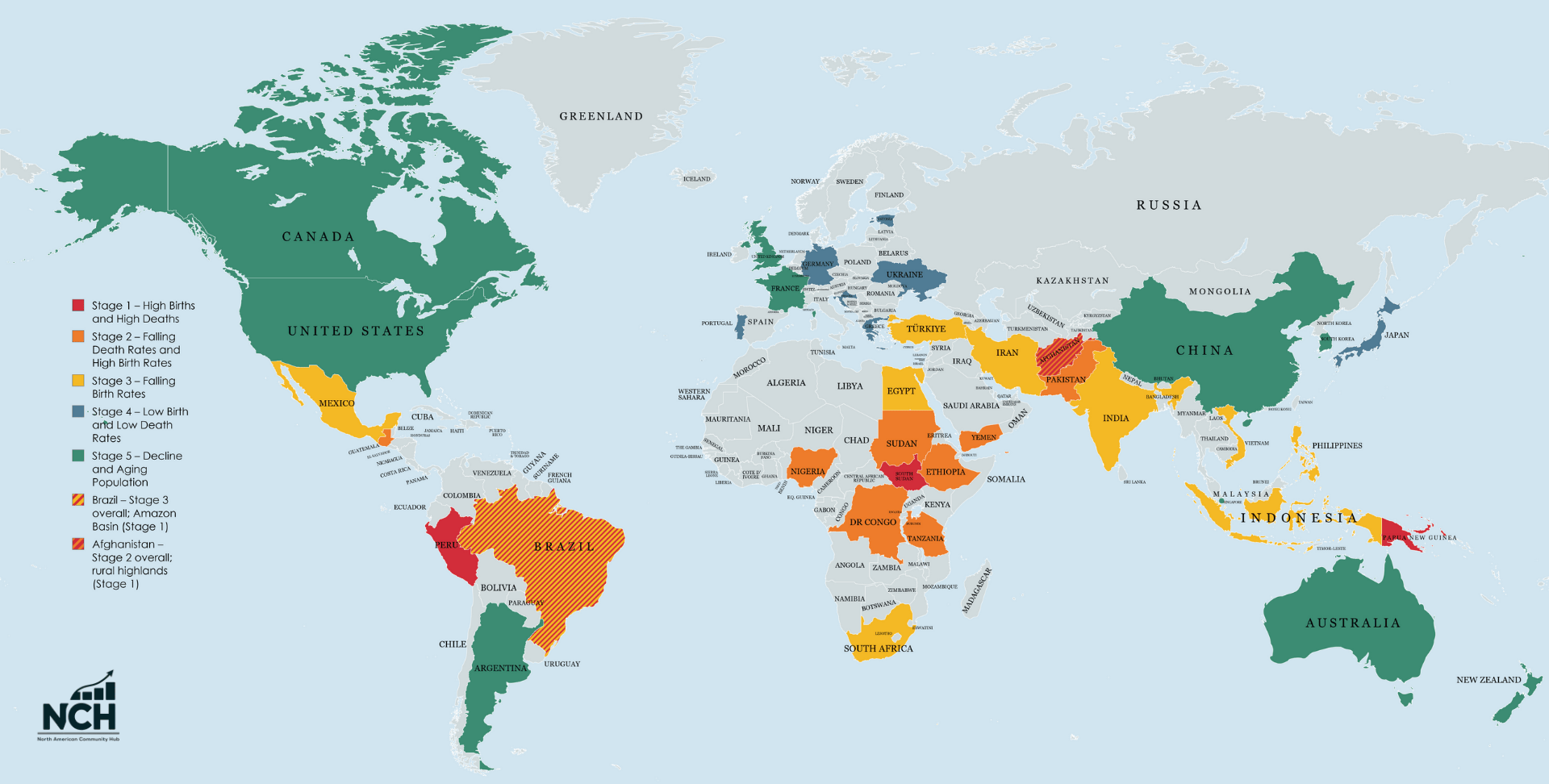
The Demographic Transition Model has five stages that describe how populations change as societies develop.
Every country moves through these stages at a different pace.
Stage 1 – High Births and High Deaths
Birth rates and death rates are both very high, so the population grows slowly or not at all. There are no countries that are officially in Stage 1 of the demographic transition model.
Stage 1 includes the few remaining places on Earth where both birth and death rates stay very high. Populations grow slowly because poor healthcare, hunger, and disease limit survival.
Some remote areas in South Sudan, Papua New Guinea, the Amazon, and Afghanistan still fit this pattern, where life remains rural and unstable.
Stage 2 – Falling Death Rates
Stage 2 countries are those that have reduced death rates thanks to better medicine and cleaner living, but still have high birth rates.
Populations grow very fast, and cities become crowded.
Nigeria, Ethiopia, Pakistan, the Democratic Republic of Congo, and parts of Afghanistan are strong examples of this stage.
Stage 3 – Falling Birth Rates
As living standards rise, people have fewer children. Families want education and better living conditions instead of larger households. People move to cities, more women enter the workforce, and education becomes a priority.
Population growth slows down, but it continues.
India, Indonesia, Egypt, Mexico, and Brazil are clear examples of this stage.
Stage 4 – Low Number of Both Births and Deaths
Birth and death rates stay low and roughly in balance. Stage 4 describes a stable phase in demographic transition. Birth rates stay subdued, death rates remain low, and population size changes very slowly.
Life expectancy is high, and many governments lean on immigration to keep numbers from slipping.
The United States, the United Kingdom, Canada, Australia, and France fit this pattern.
Stage 5 – Decline and Aging
It shows what happens when birth rates fall below death rates. There are no stages above this one.
Frequently Asked Questions
Which countries will lose the most people by 2100?
China could fall from 1.4 billion to under 800 million by the end of the century. Japan may drop below 90 million, and South Korea could shrink by nearly half. Italy, Spain, and Germany are expected to lose between 20 and 40 percent of their current population. Ukraine will suffer even larger losses because of war and migration.
Which countries are expected to grow the most?
Africa will drive nearly all global population growth through 2100. Nigeria could reach 400 million people and become one of the world’s most populated countries. Ethiopia, Egypt, and Congo will also expand fast. India will remain above 1 billion for decades, but growth will slow sharply after 2060 as fertility keeps falling.
What country has the highest life expectancy today?
Hong Kong leads with an average life expectancy of 85 years. Japan and Switzerland follow closely behind.
Which countries have fertility above 5.0?
Niger, Chad, and Somalia have fertility rates between 5.5 and 6.7, among the highest in the world.
How many people are born in the United States each year?
About 3.6 million babies are born in the United States each year. The birth rate now stands at roughly 11 for every 1,000 people, one of the lowest levels in the nation’s history. Fertility continues to fall across all states, with the average woman having about 1.6 children.
How many people die in the United States every day?
Nearly 8,500 people die in the United States every day, which adds up to around 3 million deaths a year. Heart disease, cancer, and other age-related illnesses remain the main causes. The gap between births and deaths keeps shrinking, a sign that the country is slowly edging toward the early phase of Stage 5.
Final Thoughts
Human progress has reached a strange point. For the first time in history, success itself has slowed the cycle of life. Comfort, education, and security have led people to make different choices, and entire nations are now growing older rather than larger.
Stage 5 countries stand as proof of that shift.