For years, the thalidomide litigation in Eastern Pennsylvania has moved like a slow, grinding machine. Motions, expert hearings, discovery disputes, settlement talks that went nowhere, and plaintiffs who have been waiting decades for answers.
The pattern broke this week when news emerged that a formal referral had been sent to the US Department of Justice.
Inside the courthouse, the shift in atmosphere was immediate. Lawyers who had spent years fighting over liability standards and corporate knowledge suddenly found themselves asking a very different question: what, exactly, does the federal government now believe happened here?
A DOJ referral changes the temperature of any civil case. In product liability litigation of this scale and history, it sends a signal that the matter may no longer be purely civil at all.
A Case That Has Spanned Generations

The thalidomide tragedy is not new history. The drug, originally marketed in the late 1950s and early 1960s as a sedative and treatment for morning sickness, became one of the worst pharmaceutical disasters in modern history after it was linked to catastrophic birth defects. Thousands of children worldwide were born with limb malformations, organ damage, and lifelong disabilities.
What makes the Eastern Pennsylvania cases uniquely complex is not just the original harm, but the web of distribution, foreign manufacturing, licensing agreements, and corporate restructuring that unfolded over decades.
Many of the plaintiffs are now elderly. Some are pursuing claims on behalf of deceased family members. Others are adult children born with permanent injuries who have lived their entire lives under the shadow of a drug they never chose.
For years, the litigation has revolved around what U.S. entities knew, when they knew it, and how much control they exercised over the drug’s entry into American research channels, testing programs, and limited distribution.
What the DOJ Referral Actually Means
A Department of Justice referral does not automatically mean criminal charges are coming. But it does mean federal prosecutors now believe there is enough evidence, or enough unresolved questions, to warrant direct federal scrutiny.
That scrutiny can take many forms. It can involve corporate fraud investigations, obstruction issues, misrepresentation of safety data, or failures to disclose known risks to regulators.
In practical terms, the referral places the long-running civil cases into a parallel federal review track. Evidence already produced under civil discovery can now be examined under criminal standards.
Witness testimony that once faced only civil cross-examination may now be evaluated for potential perjury or federal misstatements.
That is why lawyers on both sides are suddenly more careful with their language. What was once aggressive civil advocacy now carries far steeper consequences.
Tension Rises Inside the Courtroom
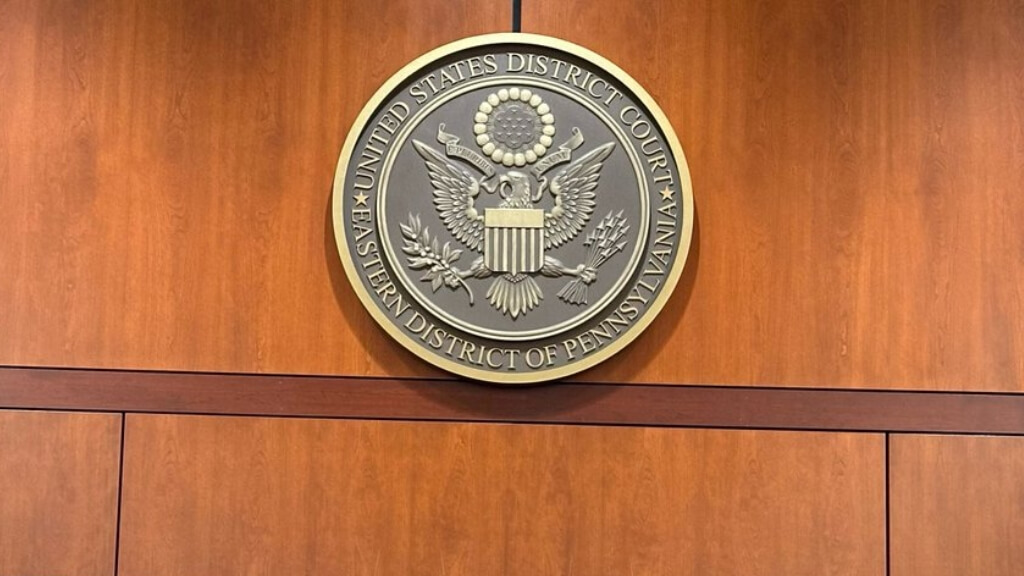
Observers inside the Eastern Pennsylvania court describe a subtle but unmistakable shift. Judges who once emphasized procedural efficiency are now weighing the impact of potential federal intervention on every scheduling decision.
Defense attorneys who once focused on narrowing the scope of claims are now navigating dual-track risk. Plaintiff attorneys, long frustrated by slow progress, now find themselves balancing hope with caution.
One attorney involved in the case described the moment bluntly. “This changes the posture of everything. The civil case no longer exists in isolation.”
Judges have not suspended proceedings, but motions are being reconsidered with new urgency. Depositions that were once viewed as routine may now carry far greater significance.
Why the Timing Matters
The referral arrives at a fragile moment in the life of the litigation. Some plaintiffs have already passed away while waiting for a resolution.
Others face declining health tied directly to congenital injuries suffered at birth. Families have lived for decades without formal acknowledgment of responsibility.
At the same time, corporate defendants have undergone mergers, restructurings, and jurisdictional shifts. Each year that passed made reconstructing the full factual history more difficult.
From a legal perspective, the DOJ’s move signals concern that critical issues may not be fully resolved through civil liability alone.
From a human perspective, it reopened wounds that many families believed had already scarred over.
The Broader Context
The thalidomide cases exist within a much larger national reckoning over pharmaceutical accountability. Over the last two decades, federal prosecutors have pursued major cases involving opioid manufacturers, marketing fraud, safety data suppression, and off-label promotion.
The DOJ referral places thalidomide within that growing architecture of pharmaceutical enforcement. It suggests that legacy drugs are no longer shielded simply because their harm occurred generations ago.
Legal experts note that this reflects a broader shift in enforcement philosophy. The question is no longer just what harm occurred, but whether that harm was concealed, misrepresented, or minimized in ways that violated federal law.
What Plaintiffs Are Feeling Now
For surviving plaintiffs, the referral has triggered a complicated mix of relief, anxiety, and renewed trauma. Some view federal involvement as the first real indication that the full truth may finally be forced into the open.
Others fear that criminal proceedings could further delay civil compensation that has already taken decades.
One plaintiff, now in her sixties, described the moment she learned about the referral. “I don’t know if I should feel hopeful or tired. I’ve been waiting most of my life for accountability. You reach a point where you wonder if you’ll live to see the end of it.”
What Happens Next in Legal Terms

In the short term, the civil cases are expected to continue, but with heightened scrutiny. Discovery disputes may become more contentious. Protective orders surrounding confidential information could be challenged. Coordination between civil judges and federal investigators is likely.
If the DOJ determines that criminal statutes may have been violated, separate indictments could follow. That would not automatically end the civil cases, but it would reshape settlement dynamics dramatically.
Corporate defendants now face exposure on two fronts: financial liability in civil court and potential criminal exposure at the federal level.
As federal scrutiny intensifies, several plaintiffs are now seeking guidance from an experienced legal team capable of navigating both the existing civil proceedings and the potential criminal investigation that could emerge from the DOJ’s review.
Final Thoughts
The DOJ referral has not resolved the thalidomide litigation in Eastern Pennsylvania. But it has fundamentally altered its trajectory. What was once a slowly advancing civil reckoning has now become a potential criminal inquiry layered on top of years of unresolved accountability.
For plaintiffs, it reopens the door to answers. As for the defendants, it introduces a level of risk that did not previously exist.
After decades of waiting, the thalidomide cases are no longer merely historical. They are once again urgent.