

School shootings continue to pose a serious safety risk across the United States, prompting districts to rethink traditional lockdown-only strategies.
Many schools now invest in proactive safety measures that focus on early threat detection rather than responding to incidents after they have occurred. Artificial intelligence has become a central tool in this shift, enabling faster awareness and earlier intervention.
AI-powered gun detection systems analyze live camera feeds to identify visible firearms or threatening actions before emergency calls are placed. Early alerts can provide staff, security teams, and first responders with critical minutes to act, potentially preventing escalation and reducing harm.
The goal is to help school administrators and district leaders evaluate AI gun detection options, deployment approaches, operational benefits, and major vendor differences, enabling informed safety decisions.
Why AI Gun Detection Is Crucial for K-12 Schools
AI-based gun detection addresses gaps that traditional school safety measures cannot cover.
Continuous monitoring, rapid alerting, and privacy-safe design combine to create earlier awareness during high-risk situations, giving staff time to act before threats escalate.

Continuous, Fatigue-Free Monitoring
AI systems operate without fatigue, distraction, or shift changes, allowing uninterrupted surveillance across every connected camera feed.
Constant visibility remains active during instructional hours, extracurricular activities, and overnight periods, reducing reliance on human observation alone.
Consistent coverage becomes especially valuable during large gatherings and transition periods when manual monitoring often breaks down.
Fast, Actionable Alerts
Detection platforms focus on speed and clarity once a potential threat appears.
Notifications reach designated staff within seconds, allowing faster situational awareness and response coordination.
Alert content typically includes operational details that help teams react decisively, including the following elements:
- Exact camera location and zone identification
- Timestamped visual context tied to the alert
- Optional human verification prior to lockdown activation
- Human review layers help prevent unnecessary disruptions while maintaining rapid response capability.
Minimizing False Positives
Advanced models rely on extensive training datasets designed to separate firearms from everyday objects commonly carried by students or staff.
Performance metrics reported during school pilots demonstrate how accuracy reduces operational noise and alert fatigue.
Data points cited during testing include:
- False positive rates reported near 0.005 percent
- Approximate frequency of one incorrect alert per 2,000 individuals observed
Low error rates help maintain trust among administrators and responders while avoiding repeated interruptions to instruction.
Preserving Learning Environments
Invisible system operation allows security measures to remain active without changing how schools look or function.
Students and educators continue daily routines without passing checkpoints or interacting with visible screening equipment.
SafeSpace describes this approach as a frictionless layer that supports safety without adding anxiety or distraction to classrooms.
Privacy Compliance
Design choices prioritize student and staff privacy while meeting regulatory requirements.
Major vendors avoid facial recognition and long-term storage of personally identifiable data.
FERPA-aligned practices remain central to system architecture, allowing districts to strengthen safety without introducing new compliance risks.
Deployment Models and Technologies
Deployment strategies vary based on campus layout, existing infrastructure, and district IT capacity. Modern platforms support layered detection methods that extend situational awareness across wide areas.

Multi-Layered Security
Layered detection increases reliability during dynamic situations.
Visual AI paired with audio analytics, such as gunshot detection effective within 75 to 100 feet, adds redundancy.
Cloud-based alarm verification provides an added safeguard against unnecessary lockdown actions.
Social Media Threat Monitoring
In addition to on-campus detection, some districts are also exploring social media threat monitoring solutions to identify potential dangers before they reach school grounds.
These platforms scan for language patterns, images, or posts that may indicate planned violence, allowing school officials and law enforcement to intervene earlier.
Visual and Behavioral Detection
Ambient.ai evaluates visible weapons alongside behavioral indicators such as sudden crowd dispersal, abrupt movement changes, or concealed object retrieval.
Behavioral signals add context that helps security teams assess intent rather than relying solely on object presence.
Integration with Existing Infrastructure
Compatibility with standard IP camera systems reduces upfront investment and deployment time.
Supported camera ecosystems commonly include Axis, Hikvision, and Avigilon, allowing schools to enhance safety without replacing installed hardware.
Deployment Zones
Strategic camera placement improves detection reliability and reduces visual obstruction. High-impact coverage areas often include:
- Building entrances and main access points
- Hallways and student transition corridors
- Cafeterias, gyms, and athletic facilities
Funnel points measuring approximately 20 to 30 feet in width, supported by dual-camera coverage, improve visibility and detection accuracy.
System Outputs
Alert delivery integrates directly into existing response workflows.
Notifications can route to access control systems, public address networks, security radios, and mobile devices.
Certain platforms support automated lockdown actions while verification remains underway, reducing response time during confirmed threats.
Leading Vendors in AI Gun Detection
Vendor performance differs based on detection scope, verification depth, and real-world deployment history across school environments.
Selection decisions often depend on how well each platform aligns with district safety goals, infrastructure readiness, and response workflows.
Ambient.ai
Ambient.ai delivers a broad threat detection platform that extends past basic object recognition.
Behavioral analysis evaluates more than 150 threat signatures, allowing earlier identification of intent-driven activity such as concealed weapon movement or abnormal crowd behavior.
Operational strengths commonly cited include:
- Human-in-the-loop verification prior to escalation
- Patented integration with physical access control systems
- Behavioral context layered on top of visual detection
Expanded capability sets often place Ambient.ai at a higher pricing tier compared to visual-only solutions.
ZeroEyes
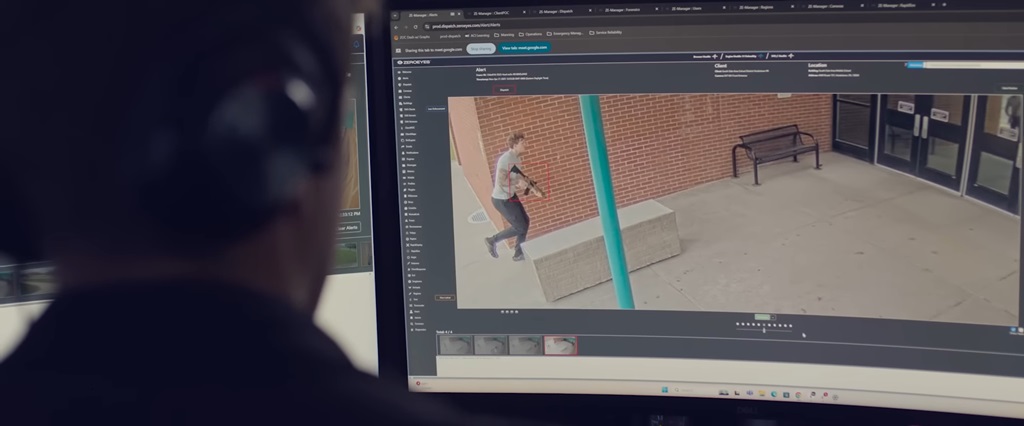
ZeroEyes centers on visual gun detection using existing camera infrastructure.
Object recognition models scan live video feeds and send alerts directly to mobile devices once a firearm is identified.
Focus remains limited to visible weapons, which introduces tradeoffs such as:
- No behavioral signal analysis
- Reliance on clear visual confirmation
- Reduced contextual awareness during early threat stages
Platform simplicity supports fast deployment but narrows detection depth.
Scylla AI
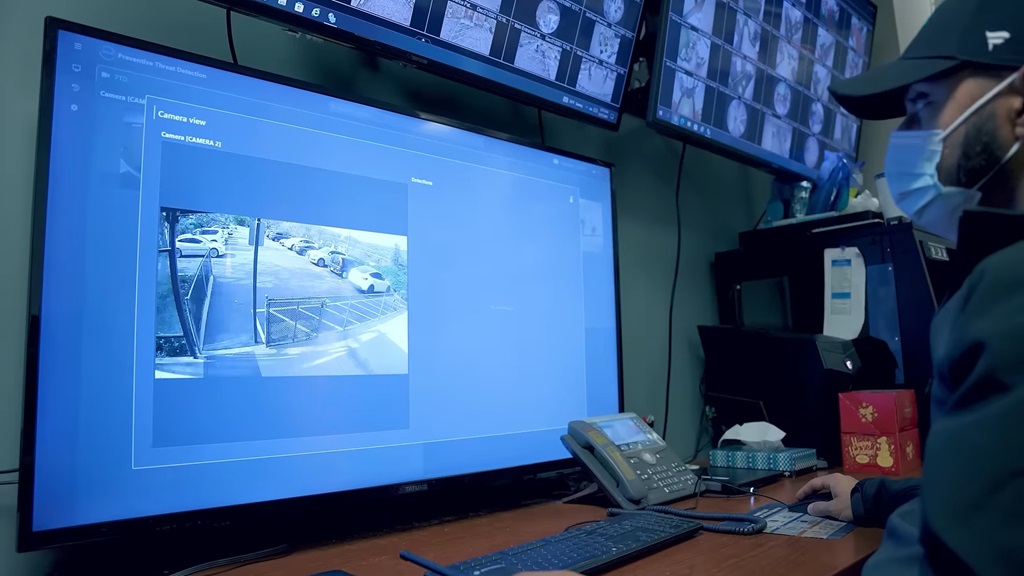
Scylla AI uses edge-based analytics paired with centralized cloud management.
On-site processing reduces bandwidth usage and latency while maintaining compatibility with standard IP cameras.
Detection strength favors object recognition, while behavior-level interpretation remains limited in scope.
Omnilert
Omnilert combines emergency communication tools with cloud-based threat detection. SOC 2 compliance supports enterprise-grade security and data handling standards.
Detection capabilities focus on broad safety alerting rather than detailed behavioral assessment, making the platform well-suited for districts prioritizing integrated notification systems.
VOLT AI
View this post on Instagram
VOLT AI delivers a broad security monitoring stack that includes video analytics and threat detection features.
Platform versatility supports multiple security use cases, though K–12-specific deployments remain fewer than more established school-focused vendors.
Evolv
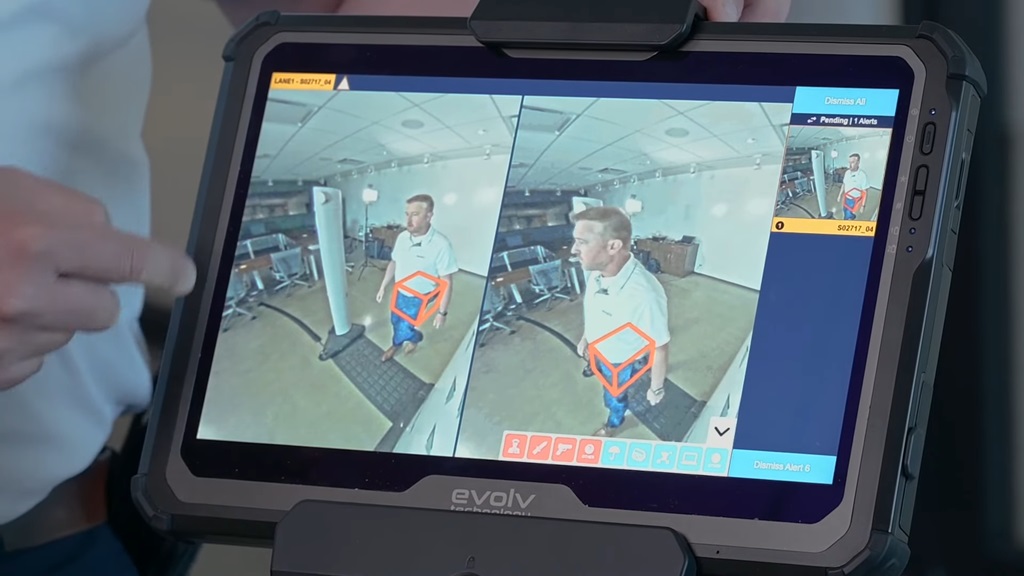
Evolv relies on hardware checkpoints that use millimeter-wave scanning to identify concealed weapons at controlled entry points.
Screening effectiveness works best at fixed access locations such as front entrances or event checkpoints.
Limitations arise in open campus environments due to:
- Lack of continuous campus-wide coverage
- Dependence on student flow through checkpoints
SafeSpace Global
View this post on Instagram
SafeSpace Global emphasizes rapid deployment with minimal operational complexity.
Platform compatibility with existing cameras and low training requirements accelerate rollout timelines.
Detection primarily targets visual cues rather than advanced behavioral modeling, favoring simplicity and speed over contextual depth.
Case Study Insights
District testing efforts prioritized accuracy, usability, system integration, and low false alarm rates in active school environments.
Deployment strategies relied on dual-camera funnel points, cloud-based verification, and AI-assisted emergency workflows.
Results showed stable performance during daily operations and controlled incident simulations.
“The technology could perform reliably in an active K–12 environment.” Allen Smith, Director of Emergency Management, GCISD
Summary
AI-driven gun detection converts standard security cameras into proactive threat identification tools.
Behavioral analytics, cloud verification, and automated alert routing increase both speed and reliability during emergencies.
Educators, parents, and students benefit through added protection that remains invisible and FERPA-compliant.
Intelligent prevention systems increasingly serve as foundational elements in maintaining safe and uninterrupted learning environments.
