

In communities scattered from rural Florida to the high plains of Colorado, vast federal prison complexes hold thousands of men and women serving time under United States law. Many of these facilities operate far from major cities, yet their scale rivals that of small towns. Inside their fences sit populations larger than some American municipalities.
Federal prisons differ from state institutions in mission and structure. Managed by the Bureau of Prisons, each complex may contain multiple facilities with varying security levels, medical centers, and specialized housing units. When populations from each facility within a complex are combined, the numbers become striking. A single federal complex can confine more than six thousand inmates at one location.
In this report, focus turns to the largest federal prison complexes in the country, ranked by total inmate population. The data reveals where the federal government concentrates its highest numbers of incarcerated individuals and offers a clearer picture of the scale, geography, and operational footprint of these institutions in 2026.
Largest Federal Prison Complexes In The United States By Inmate Population
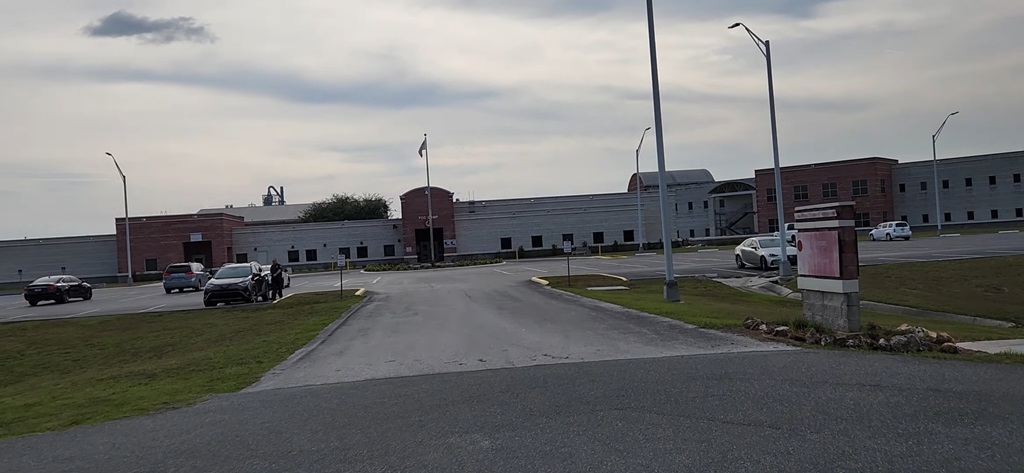
Ranked by total inmate population within each federal complex.
| Rank | Federal Prison Complex | Location | Total Inmate Population | Facilities Within Complex |
| 1 | Coleman Complex | Sumterville, Florida | 6,186 | USP Coleman I, USP Coleman II, FCI Coleman Low, FCI Coleman Medium |
| 2 | Beaumont Complex | Beaumont, Texas | 4,750 | USP Beaumont, FCI Beaumont Low, FCI Beaumont Medium |
| 3 | Yazoo City Complex | Yazoo City, Mississippi | 4,398 | USP Yazoo City, FCI Yazoo City Low, FCI Yazoo City Medium |
| 4 | Victorville Complex | Victorville, California | 4,307 | USP Victorville, FCI Victorville Medium I, FCI Victorville Medium II |
| 5 | Butner Complex | Butner, North Carolina | 4,101 | FCI Butner Low, FCI Butner Medium I, FCI Butner Medium II, FMC Butner |
| 6 | FCI Fort Dix | Joint Base MDL, New Jersey | 3,797 | FCI Fort Dix |
| 7 | Hazelton Complex | Bruceton Mills, West Virginia | 3,621 | USP Hazelton, FCI Hazelton |
| 8 | Forrest City Complex | Forrest City, Arkansas | 3,460 | FCI Forrest City Low, FCI Forrest City Medium |
| 9 | Lompoc Complex | Lompoc, California | 3,019 | USP Lompoc, FCI Lompoc |
| 10 | Allenwood Complex | Allenwood, Pennsylvania | 2,626 | USP Allenwood, FCI Allenwood Low, FCI Allenwood Medium |
| 11 | Terre Haute Complex | Terre Haute, Indiana | 2,615 | USP Terre Haute, FCI Terre Haute |
| 12 | Pollock Complex | Pollock, Louisiana | 2,595 | USP Pollock, FCI Pollock |
| 13 | Florence Complex | Florence, Colorado | 2,560 | USP Florence High, FCI Florence, USP Florence ADMAX |
| 14 | Petersburg Complex | Hopewell, Virginia | 2,359 | FCI Petersburg Low, FCI Petersburg Medium |
| 15 | USP Leavenworth | Leavenworth, Kansas | 2,023 | USP Leavenworth |
| 16 | FCI Edgefield | Edgefield, South Carolina | 2,000 | FCI Edgefield |
| 17 | Oakdale Complex | Oakdale, Louisiana | 1,975 | FCI Oakdale I, FCI Oakdale II |
| 18 | FCI Elkton | Lisbon, Ohio | 1,964 | FCI Elkton |
| 19 | USP Atlanta | Atlanta, Georgia | 1,874 | USP Atlanta |
| 20 | Tucson Complex | Tucson, Arizona | 1,787 | USP Tucson, FCI Tucson |
| 21 | FCI Seagoville | Seagoville, Texas | 1,727 | FCI Seagoville |
| 22 | FCI Beckley | Beaver, West Virginia | 1,712 | FCI Beckley |
| 23 | FCI Gilmer | Glenville, West Virginia | 1,680 | FCI Gilmer |
| 24 | FCI Sheridan | Sheridan, Oregon | 1,637 | FCI Sheridan |
| 25 | FCI Jesup | Jesup, Georgia | 1,632 | FCI Jesup |
Where The Most Inmates Are Held
The largest federal inmate populations in the United States are concentrated inside a relatively small number of multi facility prison complexes. As of 2026, the Federal Bureau of Prisons oversees roughly 150,000 people in custody systemwide. A significant share of that population sits inside the top tier complexes ranked earlier in this report.
The Coleman Complex in Florida remains the largest federal prison site in the country, with more than six thousand inmates housed within four institutions. Beaumont in Texas and Yazoo City in Mississippi follow, each holding well above four thousand individuals. When several facilities operate on one secured footprint, population totals climb quickly. A single complex can hold more inmates than many small towns have residents.
Multi Facility Design And Population Density
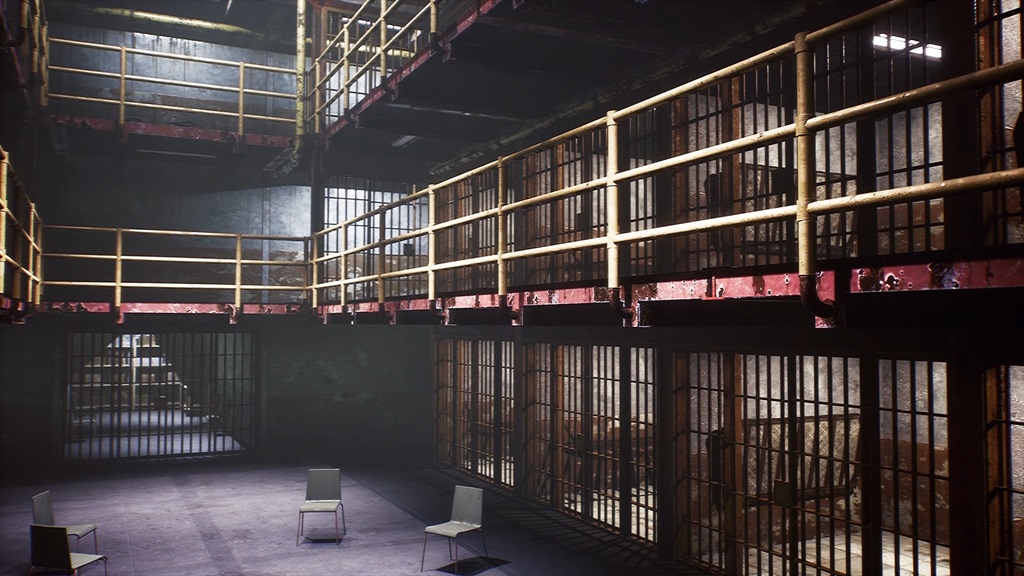
Federal prison complexes are built with layered security levels on one campus. A high security penitentiary may sit next to medium and low security facilities, sometimes alongside a federal medical center. That design allows the Bureau of Prisons to centralize staffing, perimeter security, medical services, food operations, and transportation.
Medium and low security institutions tend to drive much of the raw population count. Sentences for federal drug offenses, weapons charges, immigration violations, and financial crimes frequently place individuals in those classifications. Since those facilities typically hold larger inmate counts per institution than high security penitentiaries, totals within a complex rise fast.
Regional Patterns In The Largest Complexes
The biggest complexes are not randomly distributed. Texas, Florida, Mississippi, California, and North Carolina all appear near the top of the ranking. Many of these sites are located in rural counties where land availability supports expansion and where federal facilities often provide a major source of employment.
Federal prisons are distinct from state systems. State prisons hold the majority of incarcerated individuals in the United States, with well over one million people in state custody nationwide. Federal facilities account for a smaller share, yet their largest complexes still manage inmate populations that rival entire state systems in size when viewed individually.
Who Ends Up In Federal Prison?
Federal prison is generally reserved for violations of federal law. That includes large scale drug trafficking, interstate firearms offenses, organized crime activity, public corruption, major fraud schemes, and certain immigration crimes. Sentences are often measured in years, sometimes decades.
A common misunderstanding involves driving under the influence. In most situations, a DUI arrest remains within state jurisdiction. Individuals charged with DUI typically enter a local or county jail after arrest.
Many are released after posting bail while awaiting court proceedings. Penalties often include fines, license suspension, probation, mandatory treatment programs, and short jail terms depending on prior record and severity.
Only when a DUI involves serious bodily injury or fatalities, or intersects with federal land or federal investigative authority, does exposure increase significantly.
Even then, detention usually begins in a local facility during the pretrial phase. The path to one of the largest federal prison complexes is rare for a standard DUI case.
Also, if you got arrested for driving under influence, the DUI Bailbonds can help you get out of prison.
Why Certain States Dominate The List?

Texas has multiple major facilities and large complexes. Florida sits at the top with Coleman. California places both Victorville and Lompoc on the list. West Virginia appears several times with Hazelton, Beckley, and Gilmer.
The explanation is structural rather than accidental.
First, land and infrastructure matter. Large federal prison complexes require significant acreage, buffer zones, and access to utilities. Rural counties in Texas, Mississippi, West Virginia, and Louisiana have historically offered available land and political support for federal facilities.
Second, sentencing patterns and federal caseloads influence placement. Border states such as Texas and Arizona process high volumes of federal immigration and drug trafficking cases. Facilities near major federal judicial districts reduce long distance transport costs.
Third, employment economics play a role. In many rural regions, a federal prison is one of the largest employers in the county. Stable federal payroll encourages expansion and retention of facilities.
Top States By Number Of Prisons
| State | Large Facilities | Biggest Prison |
| Texas | 3 | Beaumont, Seagoville, part of regional federal network |
| Florida | 1 | Coleman |
| California | 2 | Victorville, Lompoc |
| West Virginia | 3 | Hazelton, Beckley, Gilmer |
| Louisiana | 2 | Pollock, Oakdale |
| Mississippi | 1 | Yazoo City |
| North Carolina | 1 | Butner |
Concentration in certain states does not necessarily mean higher incarceration rates for residents of those states. Federal inmates are often transferred from other regions. Location reflects federal logistics more than local crime rates.
Security Levels
Security classification plays a major role in population size.
Federal prisons fall into five primary categories:
- Minimum security camps
- Low security institutions
- Medium security institutions
- High security penitentiaries
- Administrative and medical facilities
Medium and low security prisons typically hold larger inmate populations than high security penitentiaries. Sentences for drug trafficking, fraud, firearms possession, and immigration offenses frequently fall into these categories.
Security Levels Inside Selected Top Complexes
| Complex | High | Medium | Low | Medical |
| Coleman | Yes | Yes | Yes | No |
| Beaumont | Yes | Yes | Yes | No |
| Butner | No | Yes | Yes | Yes |
| Florence | Yes | Yes | Yes | Yes |
High security penitentiaries generally house fewer inmates per facility due to tighter controls and housing design. Medium and low security institutions operate with larger dormitory or cell capacity, increasing overall headcount.
Population totals rise when multiple medium and low facilities operate on one campus.
Frequently Asked Questions
The Bottom Line
The largest federal prison complexes in the United States operate on a scale that rivals small cities. Several facilities grouped within a single secured perimeter can hold thousands of inmates at one location. Coleman in Florida, Beaumont in Texas, Yazoo City in Mississippi, and other major complexes illustrate how federal incarceration is concentrated in specific geographic hubs.
Population size is driven by structural design, sentencing patterns, and classification levels. Medium and low security institutions often account for the highest numbers, while high security and administrative facilities add specialized functions within the same complex.
Federal prisons represent only a portion of the total incarcerated population nationwide, yet the size of these complexes highlights how the federal system manages long term custody at scale. Understanding where the largest inmate populations are held provides context for how federal corrections are organized, staffed, and sustained in 2026.
