
Oyster reef restoration in Chesapeake Bay is actively expanding in 2026 through coordinated state, federal, and nonprofit projects focused on rebuilding reef habitats, improving water quality, stabilizing fisheries, and strengthening coastal ecosystems.
The effort has already restored thousands of acres of oyster habitat and billions of oysters, and the new phase emphasizes long-term ecological stability, watershed-level management, and measurable environmental outcomes rather than short-term rebuilding alone.
Why Oyster Reef Restoration Remains a Priority in 2026
Oyster populations in Chesapeake Bay collapsed over the past century because of overharvesting, disease, pollution, habitat loss, and shoreline development. Historic records suggest the bay once supported enormous natural reefs capable of filtering the entire water volume within days.
Today, only a fraction of that ecological capacity remains. Restoration program, therefore, or focus on rebuilding reefs not just for seafood production but for ecosystem function.
Oysters play several critical environmental roles. They filter algae, suspended sediment, and excess nutrients from the water column. They create structured habitats that support fish, crabs, and other marine organisms. They also stabilize shorelines by reducing wave energy and improving sediment balance. These environmental benefits explain why restoration receives public funding even when commercial harvest remains limited.
Scale of Restoration Progress
| Restoration Indicator | Estimated Current Status |
| Tributaries targeted for full restoration | 10 major river systems |
| Habitat restored | About 2,400 acres |
| Oysters planted or naturally recruited | Roughly 7 to 8 billion |
| Major project funding period | 2014 to present |
| Expansion focus in 2026 | Sustainability and watershed integration |
These figures reflect cumulative work rather than a single project. They include reef construction, hatchery oyster planting, shell recycling, and habitat monitoring.
How Restoration Actually Works
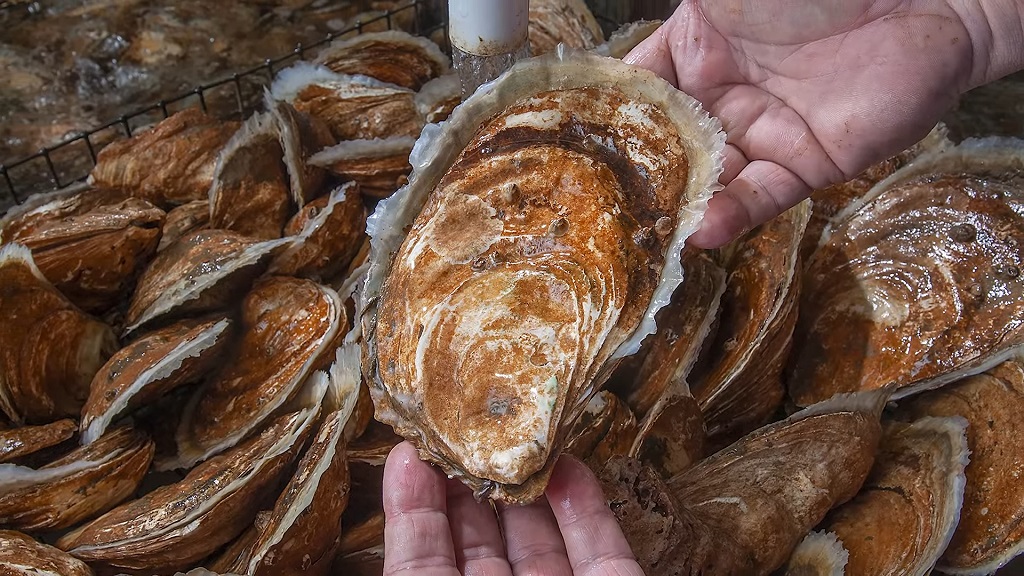
Restoration is a technical ecological process rather than simple oyster stocking. Scientists design reefs using shell, limestone, or specially engineered substrate to create a stable habitat. Hatcheries produce juvenile oysters that attach to this substrate. Over time, reefs grow naturally as oysters reproduce.
Key methods include:
Reef substrate placement
Crushed shells or rock are deposited to create a stable base where oyster larvae can attach. Without a hard substrate, larvae cannot survive.
Hatchery seeding
Juvenile oysters are cultivated in controlled environments and then transplanted to restoration sites. This speeds reef development.
Sanctuary protection
Many restored reefs are designated non-harvest zones so oysters can reproduce freely and maintain population stability.
Watershed integration
Modern restoration connects oyster projects with pollution reduction, shoreline restoration, and habitat conservation upstream.
This integrated approach defines the 2026 phase of restoration work.
Environmental Impact of Oyster Reefs
The most immediate measurable impact is improved water clarity. A single adult oyster can filter large volumes of water daily by removing phytoplankton and particulate matter. Multiply that by billions of oysters, and the ecological effect becomes substantial.
| Environmental Benefit | Practical Impact |
| Water filtration | Reduced algae blooms and clearer water |
| Habitat creation | Increased fish and crab populations |
| Nutrient cycling | Lower nitrogen and phosphorus load |
| Shoreline stabilization | Reduced erosion risk |
| Biodiversity support | Healthier marine ecosystems |
Cleaner water also allows underwater grasses to recover. These grasses serve as nursery habitat for fish species critical to regional fisheries.
Economic And Industry Connections
While ecological recovery drives restoration policy, seafood industries remain closely linked to oyster health. Sustainable oyster populations support aquaculture, commercial harvesting, tourism, and local employment.
Companies operating outside the Chesapeake region, including large seafood distributors such as Pacific Seafood, follow these developments because restored oyster habitats influence national seafood supply chains, pricing stability, and sustainability certification standards. This broader industry interest highlights how regional environmental restoration increasingly connects with global food systems.
On the oyster side, Pacific Seafood makes a very specific claim in its CSR report: it is the first and only company certified to offer 4-Star Best Aquaculture Practices (BAP) oysters (2018) (and 4-Star BAP steelhead in 2021). BAP’s structure matters here because it doesn’t treat “responsible aquaculture” as a vibe; it outlines standards across the production chain hatchery to processing, so operators have to show their work.
On the sustainability front, Pacific Seafood offers 73 certified sustainable fish species across various programs, including MSC, RFM, ASC, and BAP, an indicator of how central third-party verification has become to the company’s growth pitch.
Urban Restoration Efforts Gaining Importance
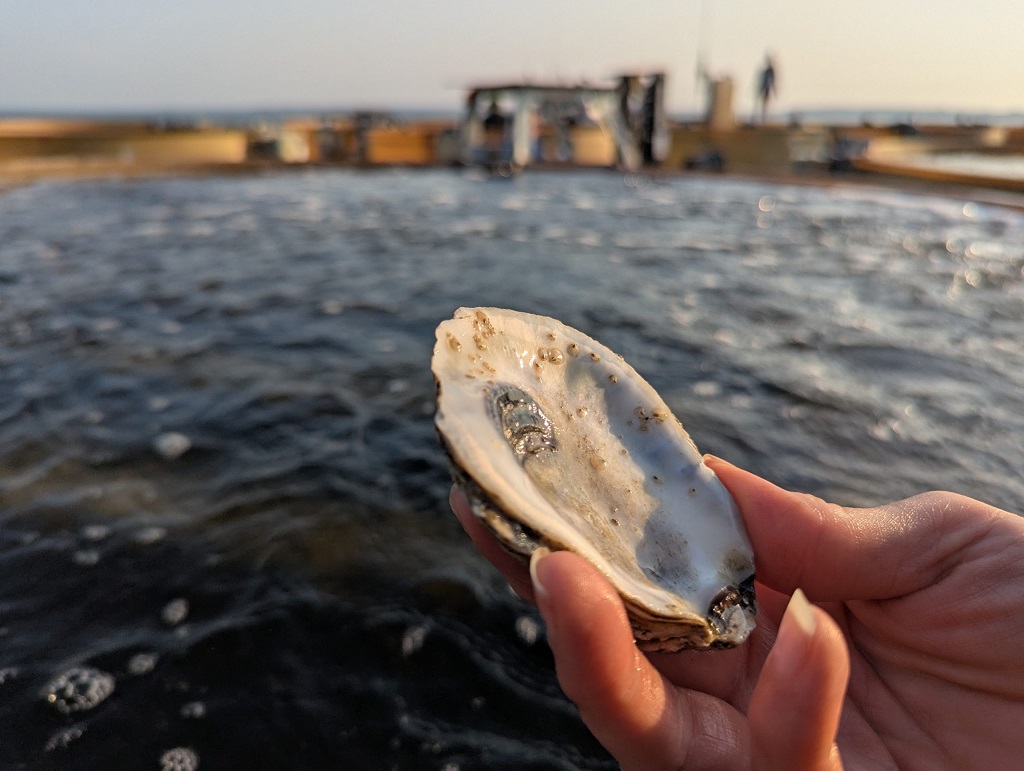
Urban waterfronts, particularly areas around Baltimore Harbor and other developed shorelines, now host experimental oyster reef projects. These initiatives aim to combine environmental restoration with community engagement.
Urban reef projects often include:
- Shell recycling from restaurants
- Floating oyster gardens maintained by volunteers
- Educational partnerships with schools
- Monitoring programs tracking water quality changes
These projects rarely target commercial harvest. Their goal is environmental improvement and public awareness.
Scientific Monitoring And Adaptive Management
Restoration success is not assumed. Continuous monitoring measures reef density, oyster survival rates, disease prevalence, water clarity, and associated biodiversity.
Scientists track:
| Monitoring Metric | Purpose |
| Oyster density | Determines reef stability |
| Recruitment rates | Indicates natural reproduction |
| Disease prevalence | Assesses long-term viability |
| Water clarity data | Measures the filtration effect |
| Biodiversity surveys | Tracks ecosystem recovery |
Adaptive management means projects are adjusted based on these findings rather than fixed plans.
Ongoing Challenges Facing Restoration
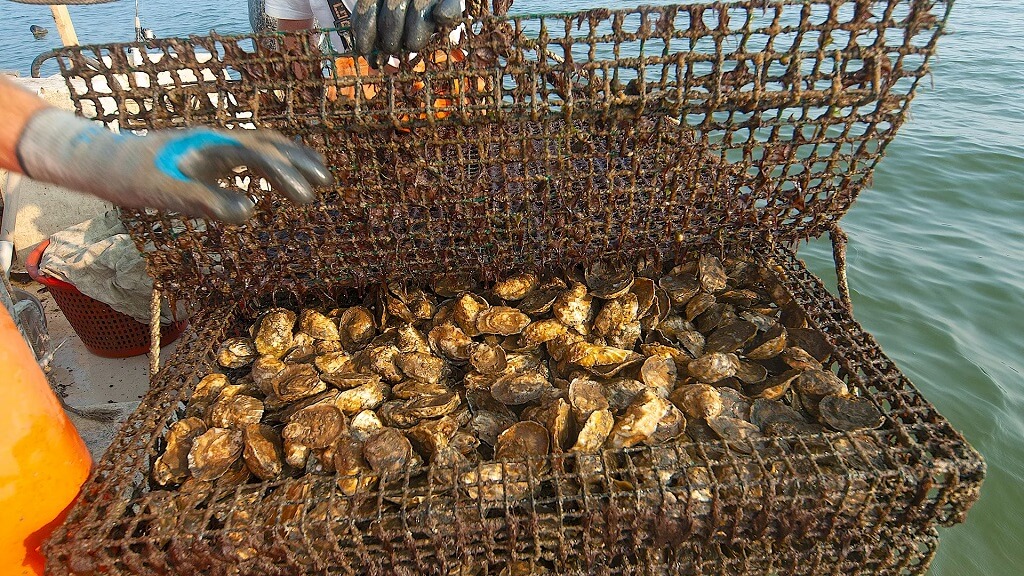
Despite progress, several risks remain. Climate change affects salinity patterns and water temperature, influencing oyster survival. Disease outbreaks remain periodic threats. Nutrient runoff from agriculture and urban development continues to degrade water quality.
Funding stability also affects long-term success. Restoration requires continuous investment over decades, not one time intervention.
Key risks include:
- Budget fluctuations at the federal and state levels
- Increasing storm intensity is affecting reef structures
- Pollution from upstream development
- Competing coastal land use priorities
Addressing these challenges requires sustained political and scientific commitment.
Policy Direction in 2026
Current restoration planning increasingly focuses on ecosystem resilience. That includes connecting oyster restoration with wetland conservation, shoreline protection, and climate adaptation strategies.
Policy priorities include:
- Expanding sanctuary reef networks
- Supporting oyster aquaculture as a sustainable industry
- Integrating restoration into coastal resilience planning
- Strengthening watershed pollution controls
- Enhancing public-private collaboration
This shift reflects recognition that oyster restoration alone cannot solve Chesapeake Bay environmental issues but remains a key component.
Long Term Outlook
Oyster reef restoration in Chesapeake Bay is widely regarded as one of the most ambitious marine habitat recovery efforts globally. Progress achieved over the past decade demonstrates that large-scale ecological recovery is possible when scientific planning, funding, and regulatory support align.
Future success depends on maintaining water quality improvements, protecting restored reefs from overharvest, and adapting to climate-driven environmental changes. Continued collaboration among governments, researchers, fisheries, and coastal communities will determine whether restoration achieves full ecological recovery or stabilizes at partial improvement.
