

Workers’ compensation law explains what is paid, how wage checks can work during recovery, and what to do when an insurance company argues that the injury does not qualify as work-related.
The Illinois Workers’ Compensation Commission is the state office that handles claim filings and decides disputes.
I will provide more details about the Workers Compensation Act in Illinois in the following sections, including benefits, reporting steps, filing rules, deadlines, and mistakes that can damage a claim.
Highlights
| Who Is Covered | Most employees in Illinois, including full-time, part-time, seasonal, and temporary workers |
| Fault Requirement | No need to prove the employer’s fault for benefits |
| Medical Care | All reasonable and necessary treatment related to the work injury gets covered |
| Choice Of Doctor | The worker may choose their own doctor within legal limits |
| Wage Replacement | Partial pay while unable to work or while working reduced hours |
| Types Of Disability | Temporary total, temporary partial, permanent partial, permanent total |
| Reporting Deadline | Injury usually must be reported to the employer within 45 days |
| Claim Filing Deadline | Up to 3 years from the injury date or 2 years from the last benefit payment |
| Occupational Diseases | Covered when linked to job duties or work exposure |
| Death Benefits | Payments to dependents and funeral cost coverage |
| Dispute Resolution | Handled by the Illinois Workers’ Compensation Commission |
| Retaliation | Employer retaliation for filing a claim is prohibited |
What Benefits Can You Get?
Workers’ compensation benefits in Illinois fall into two buckets: medical care that gets an injured worker treated, and payments that cover part of lost income when work stops or pay drops.
Amounts and timing depend on medical documentation, work restrictions, and how long recovery takes.
Medical Treatment Coverage

A work injury claim can include payment for reasonable care tied to the injury or work-related illness.
Common examples include:
- emergency room or urgent care visits
- doctor visits and specialist care
- surgery and follow-up treatment
- physical therapy and occupational therapy
- prescription medication
- imaging and testing, including X-ray, MRI, and CT
- braces, splints, crutches, and other medical equipment
- rehabilitation services when needed
A dispute often starts when an insurance company questions whether a treatment is necessary or whether a condition connects to work.
Clean medical notes, consistent injury history, and follow-up appointments reduce that risk.
Wage Payments While Recovery Happens
When a doctor says work needs to stop, temporary total disability payments may apply.
In case a worker returns with restrictions and earns less, temporary partial disability may apply.
Key point: wage payments usually follow a written work restriction, not pain level alone.
Keep every restriction note and every change in restrictions.
Permanent Disability Benefits

When an injury leaves lasting limits, permanent benefits may apply. Common categories include:
- Permanent partial disability for lasting loss of use or function, even when some work remains possible
- Wage differential in some cases where return happens to lower-paying work because of permanent restrictions
- Permanent total disability for injuries that end work capacity
The final category depends on medical opinions, job demands, and how Illinois law measures loss for specific body parts.
Vocational Rehabilitation
When a return to the same job no longer works medically, vocational rehabilitation may apply.
That can include retraining, help with job search, and related support, depending on the case.
Death Benefits
When a work injury leads to death, dependents may receive weekly payments.
Funeral expense coverage may also apply, within the limits set by law.
What Counts As A Work Injury?
Illinois workers’ compensation law applies to most people who work for an employer in the state.
Coverage includes full-time and part-time employees, temporary workers, seasonal staff, and many day labor roles. Immigration status does not block coverage.
Independent contractor status can limit access, although misclassification disputes happen often and sometimes succeed.
Coverage depends on a work connection. An injury or illness needs a clear link to job duties or work conditions.
A single accident can qualify, such as a fall, a machine injury, or a vehicle crash during work tasks.
Conditions that develop over time can also qualify when medical evidence shows a connection to the job.
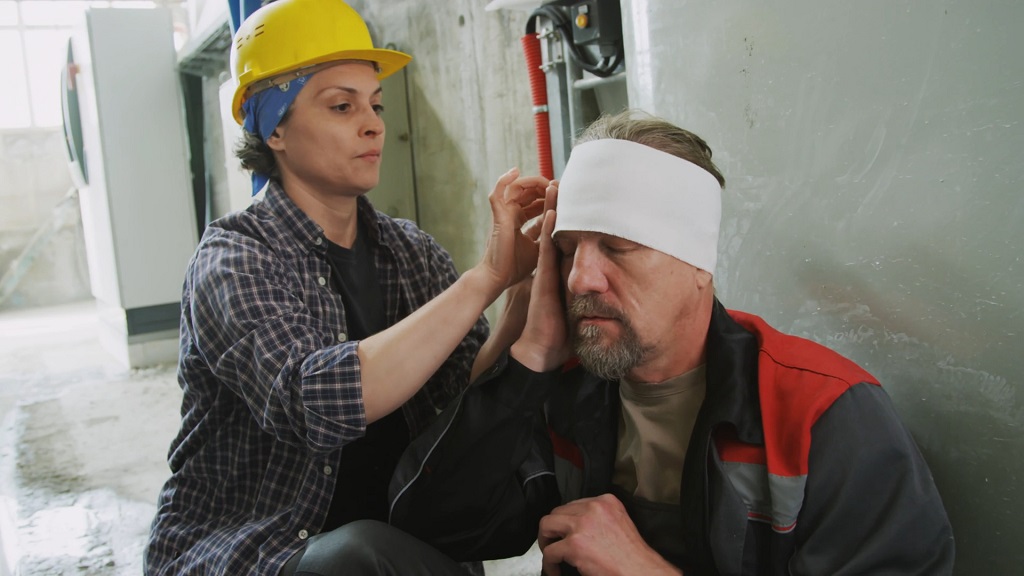
Injuries That Usually Qualify
- Slips, trips, and falls at the workplace
- Back, neck, and joint injuries from lifting or repetitive motion
- Cuts, burns, fractures, and crush injuries
- Head injuries and concussions
- Work-related vehicle accidents
- Exposure-related conditions, including chemicals or loud noise
Even with an injury that fits one of these categories, a claim can still turn into a fight over medical records, job duties, or how serious the injury looks on paper.
A lawyer can help when an insurer denies the case, delays treatment approval, pushes a return to work too soon, or offers a settlement that feels low for the damage involved.
Burns often fall into that high dispute zone because treatment can get expensive, and scarring can lead to long term limits.
Someone searching phrases like concrete burn attorney usually deals with a job site burn and wants guidance fast, especially when the employer’s carrier starts asking pointed questions.
Occupational Illnesses And Cumulative Trauma
Some claims involve no single accident. Repetitive stress injuries, such as carpal tunnel syndrome, knee damage from constant bending, or shoulder damage from overhead work, can qualify.
Occupational diseases, including lung conditions or skin disorders, can qualify when medical records show a probable work link.
Mental health claims face a higher bar. Stress alone rarely qualifies. A mental injury tied to a physical injury or a severe workplace event may qualify under limited conditions.
Location matters less than purpose. An injury can count while working off-site, traveling for work, or performing tasks for an employer, even away from the usual job location.
What To Do After Getting Hurt At Work?
The first few days are very important. What you say, what you write, and what the doctor writes can decide the whole case later.
Keep everything plain and consistent, and keep copies.

1. Tell A Supervisor And Put It In Writing
Report the injury to a supervisor. Send a short text or email with the date, the time, the place, and a simple description. Save a copy.
2. Get Medical Care And Say It Was Work-Related
Get treated. Tell the clinic staff the injury happened at work, so the medical note shows that.
Ask for the visit summary and any work restriction notes.
3. Keep Simple Proof
Photos help. Witness names help. Save schedules, pay stubs, and every piece of medical paperwork.
Keep a list of appointments and missed shifts.
4. Watch For Common Problems
A denial letter, long delays for treatment approval, or pressure to return before a doctor clears it can signal a dispute.
Deadlines You Cannot Miss
Deadlines decide whether a claim survives. Missing one can end benefits even when an injury clearly came from work.
Write dates down early and treat them as fixed.
Notice To The Employer
Illinois law usually gives 45 days to tell an employer about an injury. The clock often starts on the injury date.
For conditions that show up later, the clock usually starts when a doctor connects the condition to work.
Verbal notice can work; written notice works better.
Filing The Claim
Reporting an injury is not the same as filing a claim.
A formal filing with the Illinois Workers’ Compensation Commission still needs to happen. Most cases use a three-year deadline from the injury date.
Another common rule uses two years from the last workers’ compensation payment.
The rule that gives more time usually applies, but waiting creates risk.
Repetitive Stress And Occupational Disease
Repetitive stress and occupational disease claims get tricky because there is no single accident date to point to.
Wrist pain, shoulder pain, or breathing problems can build over weeks or months, then a doctor finally says the job probably caused it.
That doctor visit often becomes a turning point for deadlines, because it shows when a worker had a clear reason to connect the condition to work.
Keep every visit note and test result, and write down the first day symptoms started, and the first day work became harder or impossible.
Why Waiting Causes Problems
Even when a deadline technically stays open, delays hurt a case. Medical records fade, witnesses forget details, and insurers question timing.
Acting early keeps control in the hands of the worker, not the insurance company.
How An Illinois Workers’ Compensation Claim Works
A workers’ compensation claim follows a predictable path, even when it feels messy from the outside.
Knowing the flow helps avoid mistakes that cost time or money.
Notice Is Only The First Step
Telling a supervisor about an injury starts the process, yet that alone does not protect the claim long-term.
Employers usually forward the report to an insurance company, which then decides whether to pay, delay, or deny.
The Insurance Adjuster Role
An adjuster reviews medical records, job descriptions, and wage history.
That person decides whether treatment gets approved and whether wage checks start.
Adjusters also decide when to question a doctor’s opinion or order a second medical exam.
Medical Records Drive Everything

The claim follows the medical file. Work restrictions decide wage benefits.
Diagnosis language affects permanent awards. Gaps in care raise red flags.
A clean medical timeline keeps leverage on the worker side.
Light Duty And Pay Changes
Employers may offer light-duty work. If the job follows medical restrictions but pays less, partial wage benefits may apply.
If the job violates restrictions, problems start quickly and need documentation.
Independent Medical Exams
Insurers can request exams with their chosen doctors. These visits often focus on whether treatment should continue or whether work ability exists.
Saying less and sticking to facts matters at these exams.
Settlement Or Hearing
Many claims end in settlement once treatment stabilizes. A settlement usually closes future medical rights and wage claims in exchange for a lump sum.
When no agreement is reached, a hearing puts the decision in a judge’s hands.
What Happens When A Claim Gets Denied Or Delayed
Denials and delays are common, even with serious injuries. Knowing why they happen helps respond fast.
Common Denial Reasons
- claim that the injury happened outside work
- argument that the condition existed before the job
- lack of early medical proof
- late reporting
- dispute over job duties
Treatment Delays
Insurers may approve some care and block others. Surgery requests, therapy extensions, and specialist referrals often trigger disputes.
Surveillance And Social Media
Some insurers watch activity online or in public. Photos and videos taken out of context get used to question disability claims.
When Legal Help Becomes Necessary
Repeated delays, denial letters, pressure to return early, or settlement offers that ignore long-term limits often signal that handling the case alone becomes risky.
How Pay And Benefit Amounts Get Calculated
Numbers confuse most workers. Here is the short version.
Average Weekly Wage
Pay calculations usually start with gross earnings before the injury. Overtime and bonuses sometimes count.
Part-time work history can affect the number.
The Two-Thirds Rule
Most wage benefits pay about two-thirds of the average weekly wage, up to a state maximum.
Illinois updates maximum weekly benefit rates twice a year, using the Statewide Average Weekly Wage.
Rates change on January 15 and July 15, so the cap moves over time, and higher wage earners often hit the cap instead of getting a full two-thirds calculation.
For accidents from July 15, 2025, through January 14, 2026, the maximum weekly rate for TTD and the matching maximum for PTD and death benefits is $1,974.73, according to the Illinois Department of Employment Security.
Why Checks Change
Payments change when restrictions change, when light duty starts, or when doctors release a worker back to full duty.
Permanent Awards
Permanent benefits depend on the body part involved, severity, medical ratings, and job impact. Illinois law uses schedules for many body parts.
Bottom Line
Illinois workers’ compensation law can cover medical care, lost pay, and long-term benefits after a work injury, but access depends on timing and paperwork.
Reporting the injury, getting clear medical records, and watching deadlines shape the outcome more than most people expect.
Knowing how benefits work, how claims move, and when disputes usually start gives injured workers a better chance to protect income and treatment from the start.
