

Public Wastewater infrastructure plays a central role in sanitation, public health protection, and environmental management in the United States.
National data show that most households connect to public systems, yet millions remain outside modern networks due to geography, governance, and cost.
Those gaps shape health risks, environmental exposure, and access to tools such as wastewater-based epidemiology.
Highlights
- About 83 percent of households rely on public Wastewater networks, while roughly 17 percent depend on septic systems or lack complete plumbing
- Rural, unincorporated, and reservation areas show the largest gaps in sewer connectivity and infrastructure investment
- Governance boundaries often block funding and delay system expansion, especially outside incorporated cities
- Wastewater-based epidemiology excludes households without sewer access, limiting disease surveillance in underserved regions
- Public health risks rise where septic systems fail, or informal disposal methods persist
- Climate change and aging pipes increase strain on existing systems, particularly in older northeastern states
Wastewater Infrastructure in the United States
Public sewer networks dominate urban regions, while decentralized and improvised systems are common in rural and underserved areas.
Such variation shapes exposure to health risks and access to modern monitoring tools.
Types of Systems

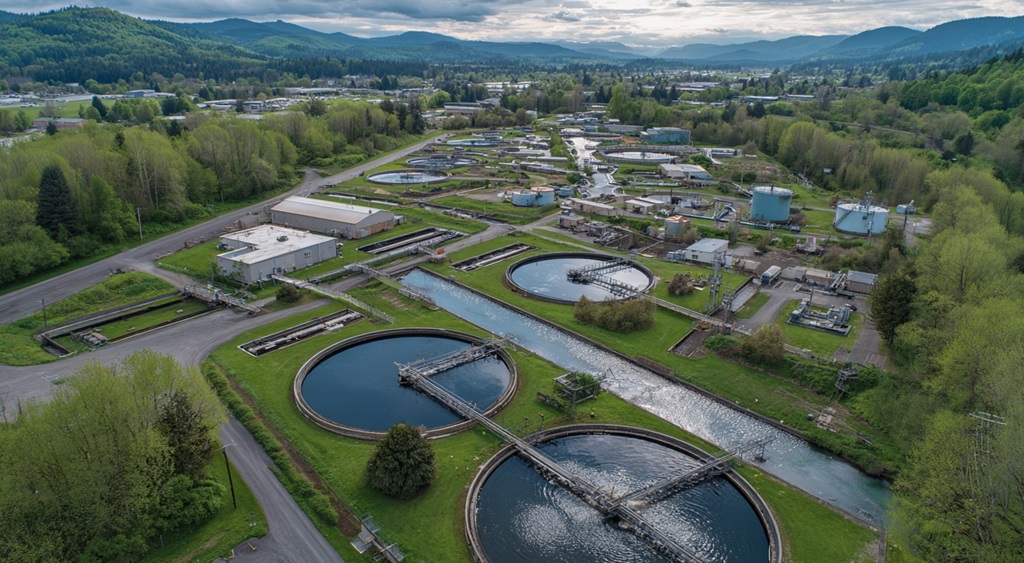
Public sewer systems operate as centralized networks managed by utilities.
Such networks support large-scale monitoring of pathogens, pharmaceuticals, and chemical markers due to:
- Consistent flow
- Standardized treatment
- Broad population coverage
Decentralized systems rely mostly on septic tanks, used by about 16% of households.
Performance depends on soil conditions, household maintenance, and funding. Efficient septic business workflow management becomes essential in areas where large numbers of households depend on private service providers, since scheduling, inspection cycles, and record-keeping influence system reliability. Performance depends heavily on soil type, groundwater conditions, household maintenance, and access to funding for repairs or upgrades.
Many areas with aging or poorly maintained septic tanks face heightened risks of contamination of nearby wells or surface waters.
Nonstandard or incomplete arrangements include outhouses, chemical toilets, or dwellings lacking adequate plumbing.
According to the Census, under 1% of residents rely on such arrangements, yet even small concentrations of these conditions can create outsized sanitation challenges.
Situations requiring closer attention include locations where:
- Wastewater disposal is informal or unregulated
- Housing is temporary or substandard
- Community governance lacks clear responsibility for services
Geographic Distribution
Patterns of sewer connectivity vary across regions due to climate, settlement patterns, governance structures, and historical investment choices.
Pacific states reach connectivity rates above 91%, while Mountain states also show high rates.
Lower connectivity appears in New England and the East South Central region, where rates fall near the mid-70s.
Furthermore, climate change puts pressure on the aging sewer pipes in Connecticut and Massachusetts.
Large pockets of unsewered households appear in several states, including:
- Alaska
- Florida
- Michigan
- Minnesota
- Areas across the Navajo Nation
Many of these locations face high installation costs, limited utility presence, or harsh environmental conditions.
Fourteen counties report situations where more than 10% of homes lack complete plumbing, with twelve concentrated in Alaska, reflecting extreme climate constraints and long histories of underfunded infrastructure.
Who Is Left Out of the 83 Percent?
Gaps in wastewater connectivity cut across demographic groups, governance boundaries, and economic conditions.
Patterns associated with race, age, income, household size, and local jurisdiction reveal consistent inequities that shape everyday sanitation and access to public health tools.
Demographic Patterns

Racial and ethnic patterns reveal notable asymmetries.
Asian, Black, and Hispanic households have a higher likelihood of sewer connectivity, reflecting a greater presence in urban areas.
American Indian, Alaska Native, and White households show a lower likelihood, often due to residence in rural or reservation lands with limited infrastructure investment.
Age contributes to further disparities, as older householders are less connected.
Many live in older housing stock or locations where infrastructure never expanded.
Household size influences access as well, since larger households more frequently reside in areas dependent on septic systems.
Income patterns follow complex trajectories. Nationally, higher-income households show lower sewer connectivity, largely because of residence in rural or exurban areas.
Several states show the opposite pattern.
Florida, Minnesota, and California offer examples where higher income aligns with greater sewer coverage, often because newer developments belong to utility districts.
Certain underlying elements shape these variations:
- Lot size regulations that encourage septic use
- Local building codes and utility expansion policies
- Differences in county or city growth management practices
Geographic Inequities Linked to Governance
Unincorporated communities hold roughly one-fifth of residents across several states and encompass nearly half of the land area in those states.
Boundaries separate these communities into three categories: islands surrounded by city limits, fringes located just outside municipal lines, and outlying areas farther away.
Many of these places receive limited attention in federal statistical programs, since local boundaries rarely match Census geography.
Such communities often face reduced representation, fewer service commitments, and fragmented administrative responsibility.
Inadequate coordination can leave residents without predictable access to wastewater infrastructure or funding pathways needed to build it.
Structural Barriers to Sewer Connectivity
Lack of sewer access often results not only from geography but also from political arrangements that shape investment, taxation, service delivery, and local power.
Disparities persist across regions because governance systems are not always aligned with service needs.
Incorporation and Governance Factors
Counties oversee unincorporated areas, yet many counties lack robust taxation authority, stable revenue, or political leverage to extend water and wastewater services.
Selective annexation has a long history in several regions, occasionally bringing wealthier neighborhoods into city limits while leaving poorer or minority communities outside.
Many affected communities include large Latino or Black populations.
Extraterritorial jurisdictions add a layer of complexity.
Cities retain the ability to plan land use outside their boundaries without any obligation to extend sewer service.
Such arrangements can delay or obstruct investments, creating a structural divide between areas inside and outside city governance.
Infrastructure Disparities
Unincorporated areas show sharply higher odds of lacking sewer connections.
High-poverty unincorporated zones are more than three times as likely to contain unsewered land, and nearly eighteen times as likely to lack centralized water when poverty and distance coincide.
Island communities show some of the highest unserved rates, with a median of about 15% lacking sewer access.
Incorporated municipalities offer far higher coverage, with nearly half reporting full connectivity.
Contrasts between incorporated and unincorporated spaces highlight how governance boundaries shape physical infrastructure.
Conditions that intensify service gaps include:
- Fragmented jurisdictional authority
- Limited eligibility for federal or state grants
- Inconsistent long-term planning for utility expansion
Barriers to Funding
Federal financing programs such as the Clean Water State Revolving Fund largely prioritize projects managed by municipal utilities.
Homeowners in unincorporated areas and community-based organizations often lack pathways to apply directly, limiting their ability to:
- Replace failing septic systems
- Construct shared systems
- Transition to sewer networks
Such limitations create cycles where communities most in need face the greatest administrative hurdles.
Public Health Implications
Wastewater systems serve as both sanitation infrastructure and population-level data sources.
Gaps in sewer access affect exposure to contamination, reliability of disease surveillance, and the ability of public health agencies to forecast emerging threats.
Wastewater-Based Epidemiology
Wastewater monitoring has been used to track viral infections, detect polio resurgence, and measure signals linked to opioid use and antimicrobial resistance.
Surveillance depends on consistent flows within centralized systems, meaning about one in five households remains outside detection.
Such exclusion reduces visibility into community-level trends, particularly in rural and underserved regions.
Equity Concerns
Populations outside wastewater surveillance often include older residents, rural households, American Indian and Alaska Native communities, and high-income households reliant on septic systems.
Public health decisions based on sewer-only data may overrepresent urban or suburban areas, potentially omitting areas experiencing different disease patterns, exposure profiles, or environmental pressures.
Service gaps create several consequences:
- Underreported disease transmission in unconnected regions
- Delayed identification of outbreaks in rural or reservation communities
- Reduced capacity to monitor chemical contamination where septic failures occur
Modeling Insights

Simulation work shows that wastewater monitoring remains informative as long as communities outside sewer networks maintain some interaction with connected populations.
Interaction refers to mobility, shared workplaces, economic activity, or social networks.
Once interaction drops below roughly 3% to 4%, wastewater signals no longer reflect trends in households without sewer access, limiting the accuracy of public health estimates.
Closing Thoughts
National connectivity rates obscure large gaps rooted in governance structure, race, age, income, and settlement patterns.
Households excluded from sewer networks often face higher health risks, weak infrastructure investment, and limited visibility in data used for policy decisions.
Attention to the 17% outside the sewered majority is essential for fair access to sanitation, environmental protection, and epidemic preparedness.